Bird Watching Tanzania: Ultimate Guide to 1,100+ Species & Best Birding Parks
Most people come to Tanzania for lions, elephants, and the Great Migration. They leave talking about the birds.
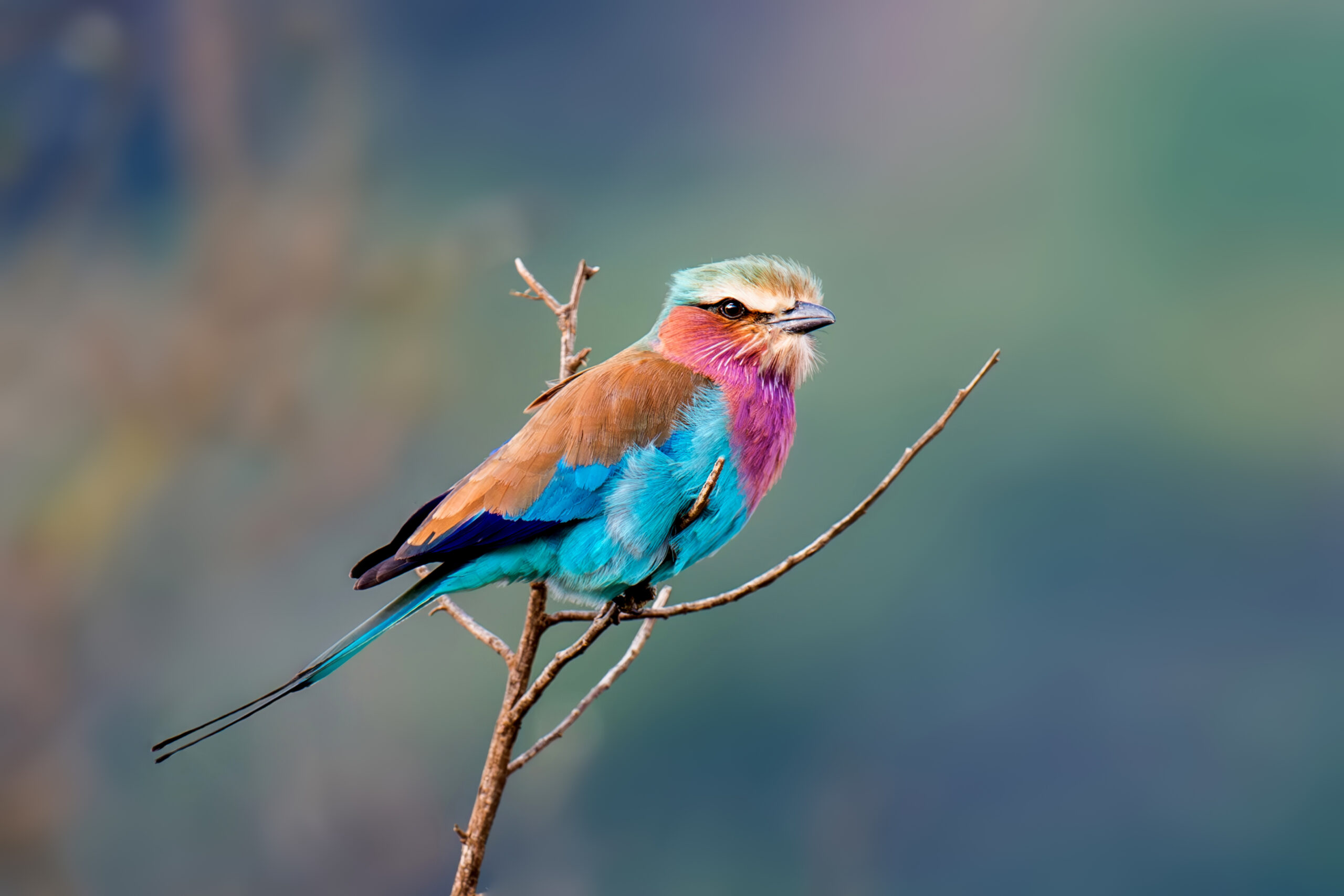
This surprises almost every first-time visitor. You book your safari for the Big Five and then find yourself spending twenty minutes watching a lilac-breasted roller catch the morning light on a dead acacia branch its feathers an impossible combination of turquoise, lilac, chestnut and green and you completely forget there’s a pride of lions two hundred metres away.
That is the magic of bird watching in Tanzania. It sneaks up on you.
For dedicated birders, however, Tanzania is not a surprise it’s a pilgrimage. With over 1,100 birds recorded, more than 800 of which are resident species and nearly 200 regular migrants, Tanzania has one of the largest bird species lists of any country in Africa. Whether you are a lifelong birder chasing endemics or a first-time safari guest who simply loves beautiful things, Tanzania will exceed every expectation.
This is your complete, honest guide to bird watching in Tanzania where to go, what to see, when to visit, and how to make the most of every single day in the field.
Why Bird Watching Tanzania Is One of Africa’s Best Experiences
Tanzania’s extraordinary bird diversity comes down to one thing: habitat variety. The diversity of birds in Tanzania is driven by the diversity of its habitats from the immense savannah grasslands of the Serengeti and Tarangire, home to raptors and ground birds, to the Rift Valley lakes such as Manyara and Natron, home to massive flocks of flamingos. 
Add to this the Eastern Arc Mountains one of the world’s most important biodiversity hotspots the Indian Ocean coastline, the forests of Kilimanjaro, the papyrus swamps of Lake Victoria, and the islands of Zanzibar and Pemba, and you have a country that offers more distinct birding ecosystems than almost anywhere else on the planet.
About 40 endemic species are recognized in Tanzania birds found nowhere else on Earth. For serious birders, that number alone makes Tanzania essential.
But even for casual wildlife lovers, the sheer visual spectacle of Tanzanian birds the colours, the sizes, the behaviours makes every game drive feel like walking through a living field guide.
Tanzania’s Most Spectacular Birds: What You Must See
1. The Lilac-Breasted Roller Tanzania’s Most Photographed Bird
If Tanzania had an unofficial bird ambassador, it would be the lilac-breasted roller. It is the most photographed bird in Africa  and once you see one, you will understand exactly why.
Perched on a bare branch against a golden savannah background, this bird is a masterpiece of colour. Eight distinct shades turquoise, lilac, chestnut, blue, green, white, black and brown all on a single bird the size of a small pigeon. In flight, the electric blue wings flash in the sunlight and the effect is nothing short of extraordinary.
Where to see it: Everywhere across northern Tanzania Serengeti, Tarangire, Ngorongoro, Lake Manyara. It is one of the most reliably spotted birds on any safari.
Best photo tip: Catch it at dawn or dusk when golden light makes the colours explode. They often perch on the same branch repeatedly be patient and you will get the perfect shot.
2. The Grey Crowned Crane Tanzania’s Regal Dancer
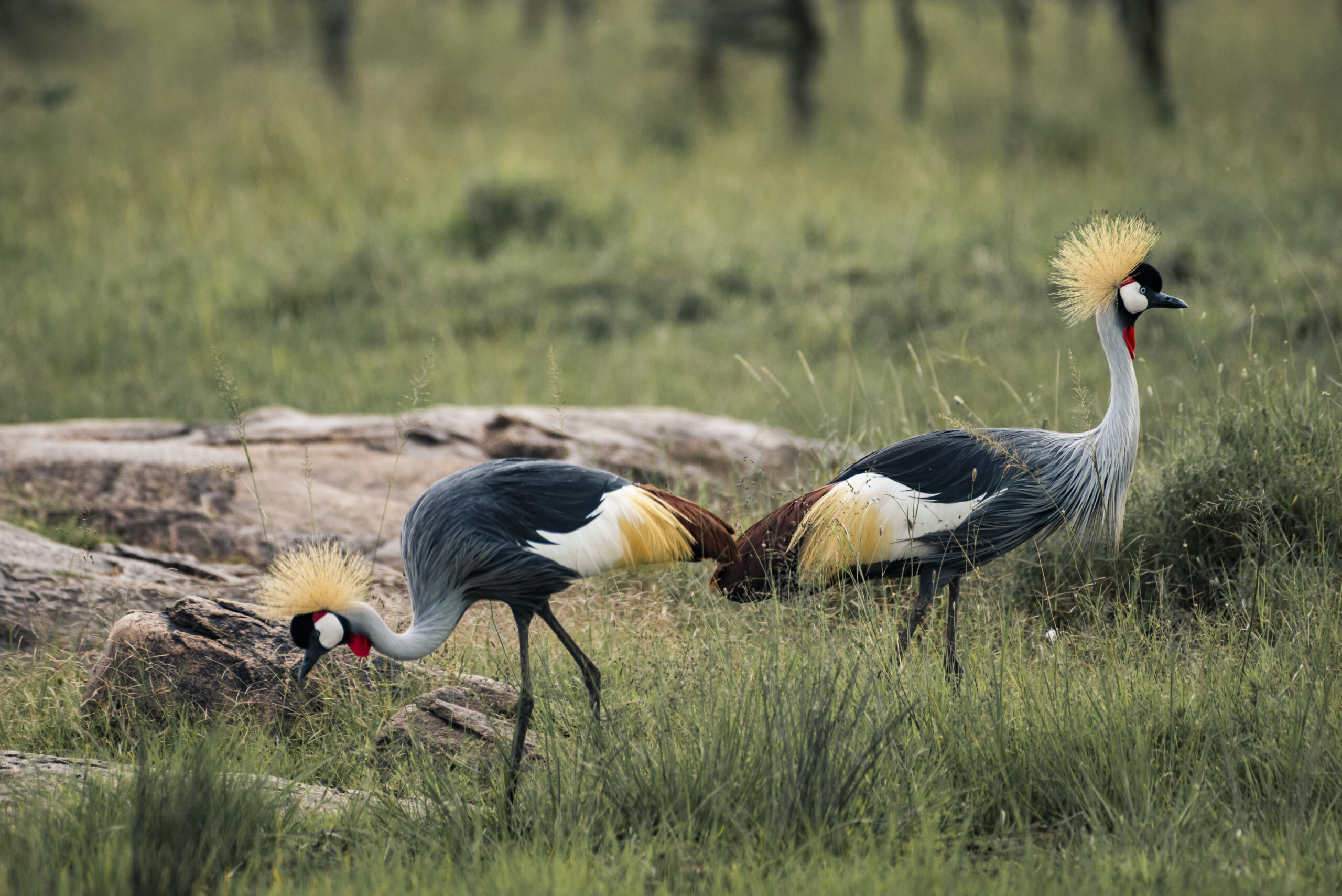
The Grey Crowned Crane is native to grasslands and wetlands, especially within the south and east of Africa. This outstanding winged species is highly regarded for its grace and beauty, and also because it represents prosperity, peace and longevity.
Standing nearly a metre tall with a crown of golden bristle feathers, a vivid red and white face, and slate grey plumage, this bird looks like it was designed by an artist. Its courtship dance a series of jumps, bows and wing spreads is one of the most theatrical displays in the bird world.
Where to see it: Catch the grey crowned crane soaring above Ngorongoro Crater this is one of the most reliable locations. Also common in the Serengeti’s wetter areas and around Lake Manyara.
Important note: This species is classified as endangered. Seeing one is a privilege worth appreciating.
3. The Superb Starling Beauty You’ll Take For Granted (Then Miss Terribly)
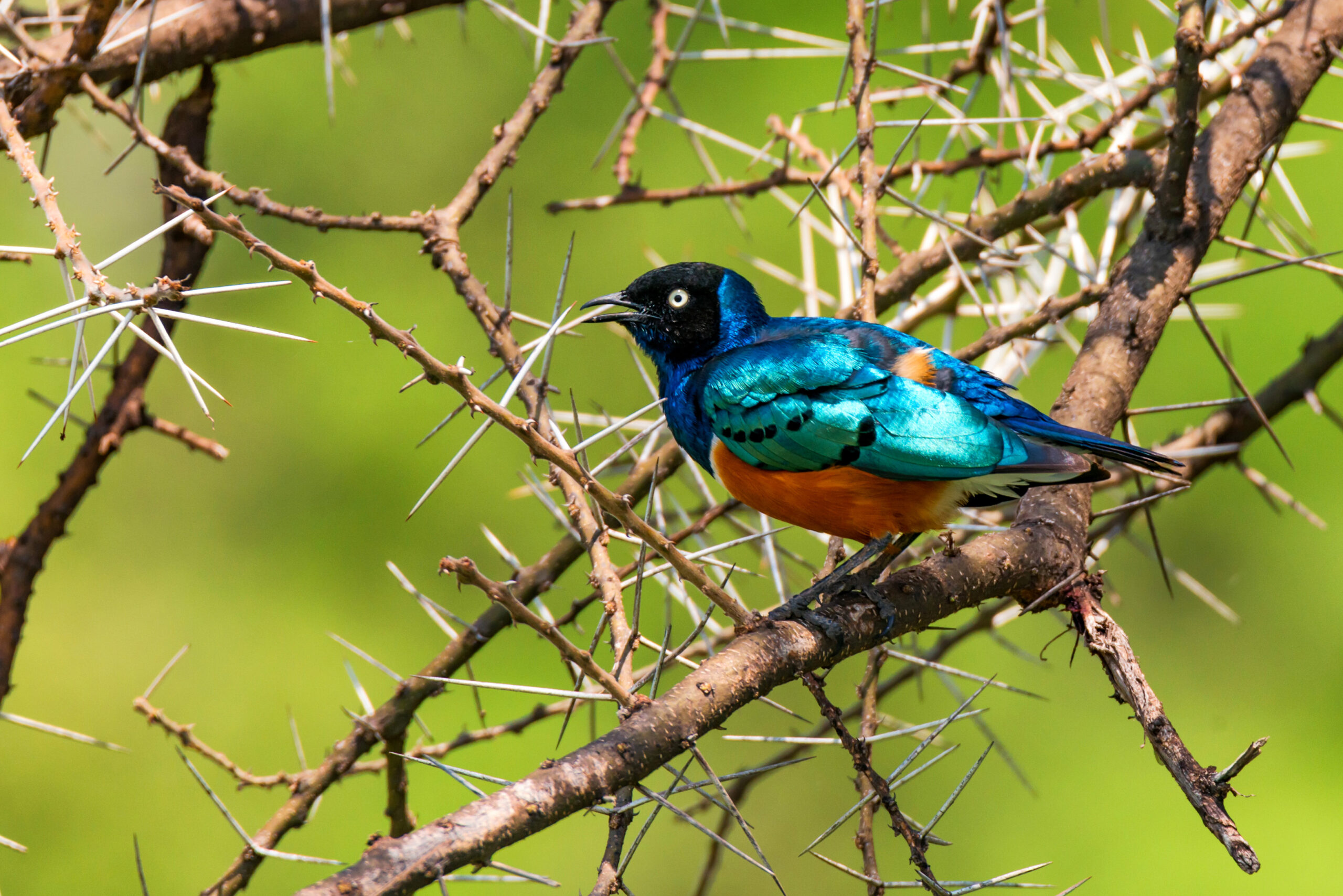
Most visitors dismiss the superb starling at first it’s everywhere. By day three of your safari, you stop photographing it. By day ten, you realise it may be one of the most beautiful small birds you have ever seen.
The superb starling is famous for being vibrant in colour combinations such as bright blues, turquoise, zesty orange, whites and deep blacks. The most spectacular of the region’s glossy starlings has glossy blue upperparts separated from the red belly by a white band. It is locally abundant in the Serengeti, Manyara, Tarangire and Ngorongoro.
Where to see it: Essentially everywhere in northern Tanzania. It is bold, curious, and completely unafraid of humans making it a perfect photography subject.
4. Flamingos Tanzania’s Pink Spectacle
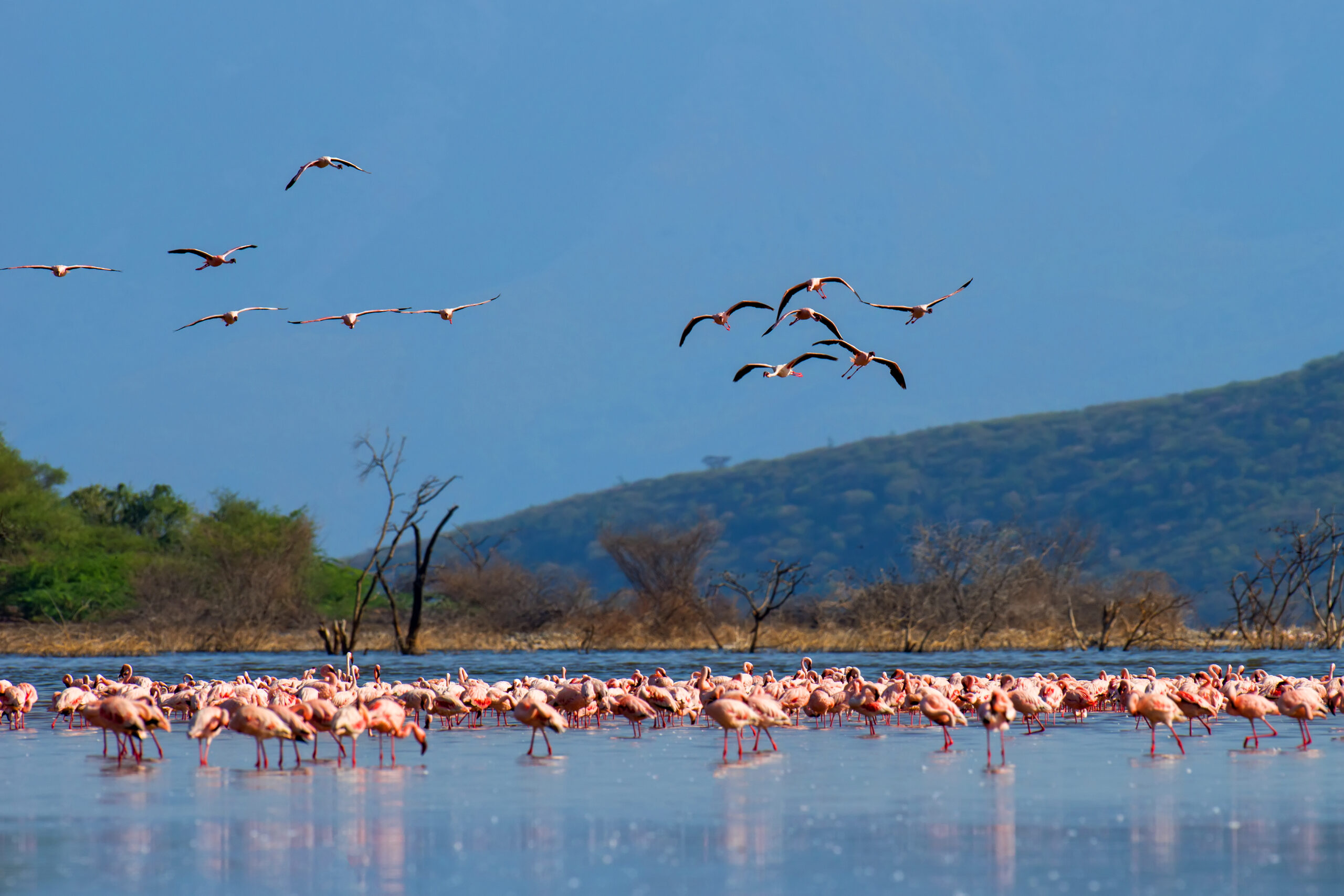
Nothing prepares you for the sight of thousands of flamingos gathered at the edge of a Rift Valley lake. The sound alone a constant low gabbling roar is unforgettable. The visual impact of so much pink against the blue water and brown earth is simply overwhelming.
Flamingos are a famous sighting throughout the country, and the best place to see them in all their glory is Lake Manyara, where its alkaline waters attract a huge gathering throughout the months of November to May.
Lake Manyara National Park is known for the flamingos that inhabit the lake. During the wet season they inhabit the edges of the lake in flocks of thousands.
Where to see it: Lake Manyara is the premier location. Lake Natron Tanzania’s most remote and dramatic lake hosts one of Africa’s most important flamingo breeding grounds.
5. The Southern Ground Hornbill The Thunderous Caller Of Dawn
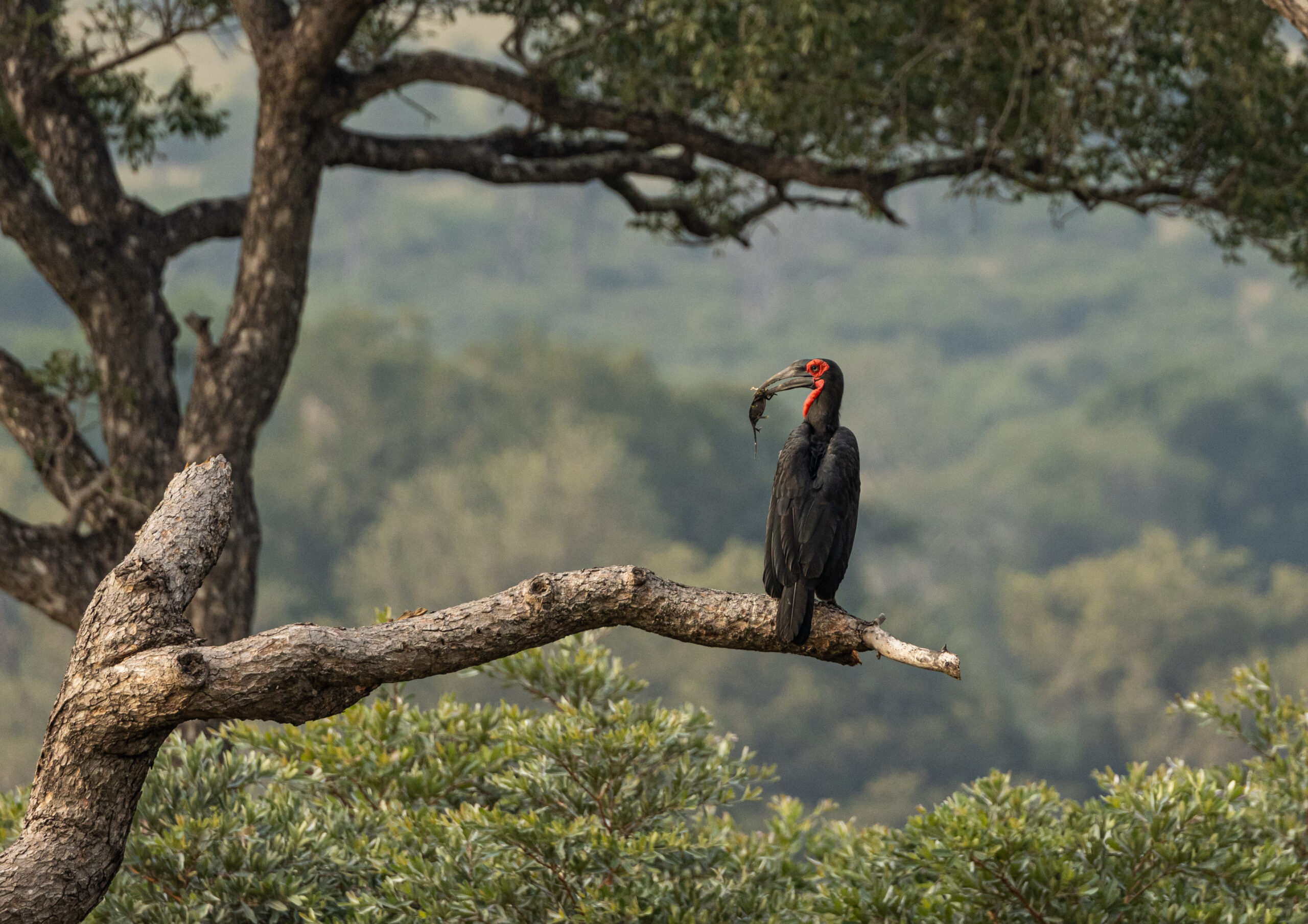
The Southern Ground Hornbill is one of many fascinating types of birds in Tanzania that you do not want to miss. With strikingly strong features black plumage with an intense red face and neck it spends most of its time walking through open plains, woodlands and savannas. Listen out for their deep, echoing calls at dawn which carry across the vast landscapes.
This is one of Africa’s most ancient-looking birds. Walking slowly through the grass in small family groups, its deep booming call at sunrise is one of the defining sounds of the African bush. It is also one of the slowest-reproducing birds in the world a pair raises just one chick every nine years.
Where to see it: Serengeti and Tarangire National Parks offer the best chances. Because of their declining numbers, sightings can be rare making every encounter special.
6. The Saddle-Billed Stork Africa’s Most Elegant Waterbird
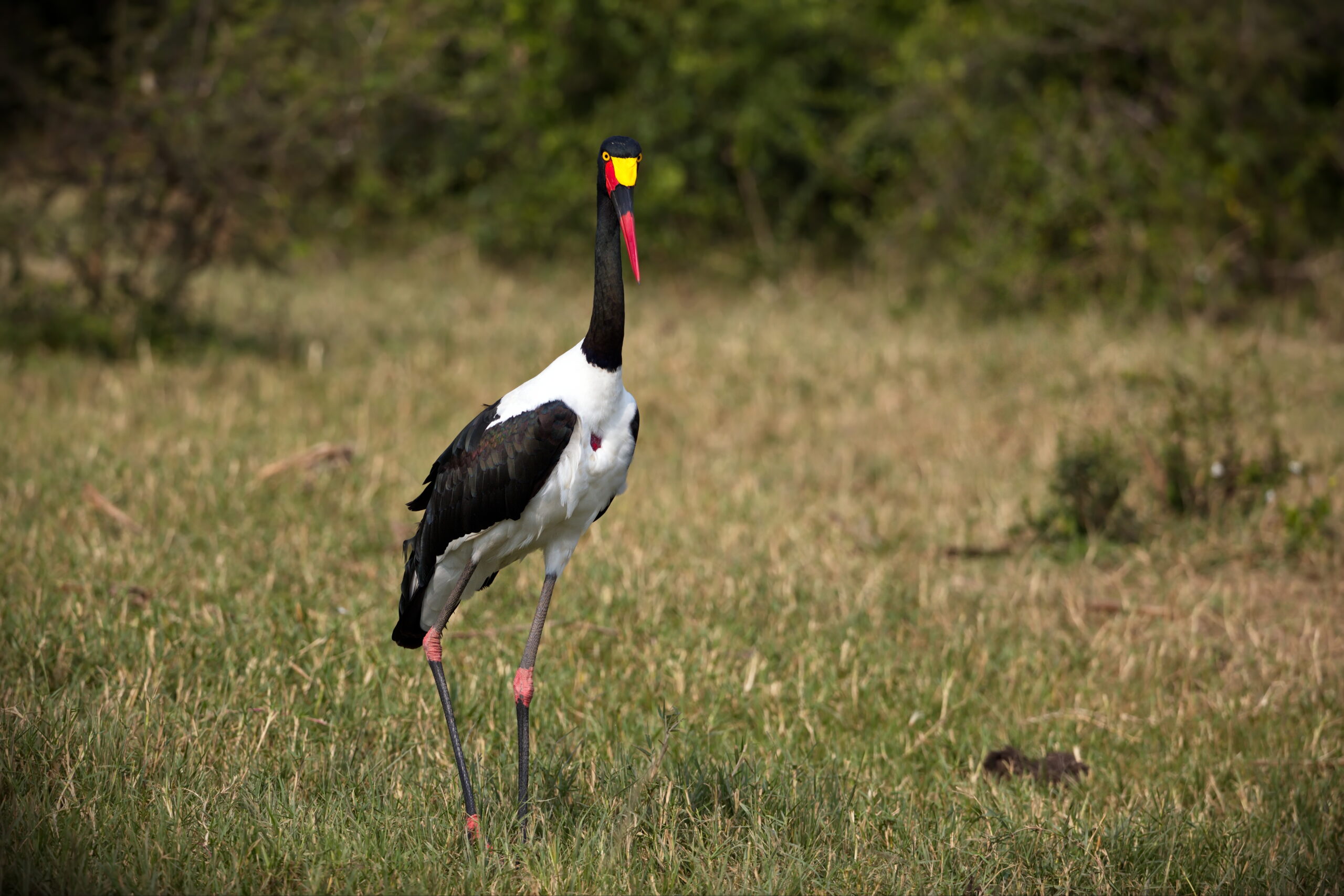
Standing over 1.5 metres tall with a spectacular red, black and yellow bill, the saddle-billed stork is arguably Africa’s most visually striking large waterbird. It wades slowly through shallow water, stabbing at fish with surgical precision.
The Serengeti is a stronghold for the saddle-billed stork, a handsome pied giant with a red and yellow bill. Seeing one reflected in still water at dawn is genuinely one of Tanzania’s great wildlife moments.
Where to see it: Serengeti particularly near the Grumeti and Mara rivers. Also the Selous Game Reserve along the Rufiji River.
7. Tanzania’s Endemic Birds The Real Prize For Serious Birders
Tanzania boasts several bird species that cannot be found anywhere but in the country. Highlights of the endemics include the Ashy Starling, Yellow-collared Lovebird, Grey-breasted Spurfowl, and Rufous-tailed Weaver.
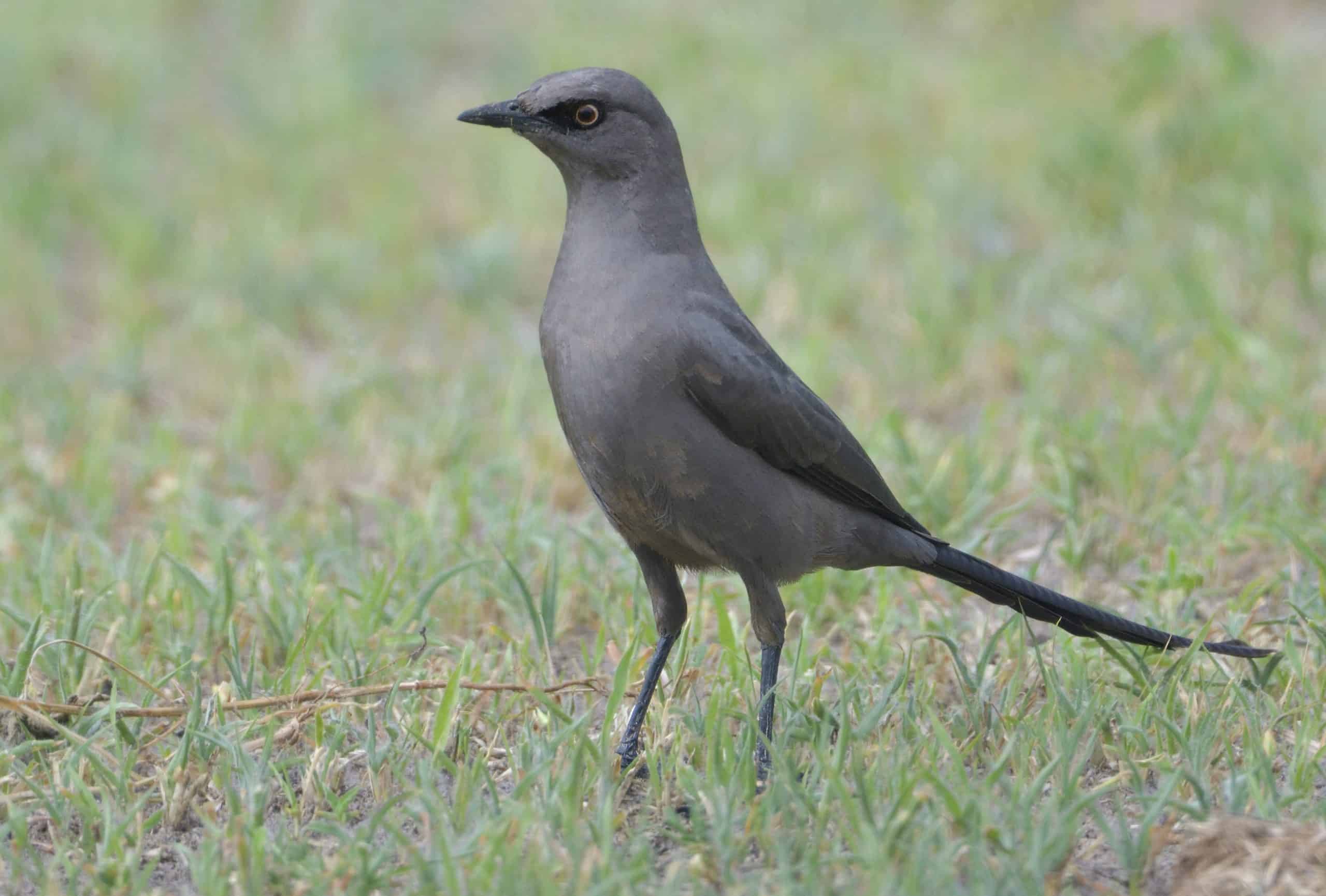
The bird watching Tanzania arshy starling is unique a metallic grey bird found only in Tanzania’s central regions, particularly around Tarangire and Ngorongoro. Though its plumage is ostensibly ash-grey, it has a sheen that in certain lights can make it look like a metallic flying machine.
The Yellow-collared Lovebird is one of Tanzania’s most charming endemics a tiny, noisy, brilliantly coloured parrot found in the baobab woodlands of Tarangire. They are delightful among the impressive baobabs of Tarangire National Park.
For the truly dedicated, the Eastern Arc Mountains the Usambara, Uluguru, and Udzungwa ranges are home to species found nowhere else on Earth, making them the most important birding area in the country.
Best Bird Watching Parks in Tanzania
Tarangire National Park Tanzania’s Birding Capital
Ask any serious birder and they will tell you the same thing: Tarangire is Tanzania’s single best birding park. Daily species counts regularly exceed 100, with a daily high of 162 species recorded in a single day in Tarangire.
The combination of ancient baobab trees, the Tarangire River, and diverse woodland creates an exceptional variety of habitats in a relatively small area. Three Tanzanian endemics and near-endemics can be found here: the Ashy Starling, Yellow-collared Lovebird, and Rufous-tailed Weaver.
Top species: Ashy Starling, Yellow-collared Lovebird, Von der Decken’s Hornbill, Red-and-yellow Barbet, Kori Bustard, Bateleur Eagle, Southern Ground Hornbill.
Lake Manyara National Park Waterbird Paradise
More than 400 species of birds inhabit Lake Manyara National Park and many remain throughout the year, making it one of the best spots for bird watching in Tanzania.
The park’s famous alkaline lake attracts enormous concentrations of flamingos, pelicans, herons and storks. The fever tree forest along the lake shore is excellent for forest species, while the groundwater forest hosts some of Tanzania’s most beautiful sunbirds.
Top species: Flamingos, African Fish Eagle, Grey Crowned Crane, Goliath Heron, Yellow-billed Stork, Purple Heron, Augur Buzzard.
Serengeti National Park 500 Species Across Endless Plains
The Serengeti National Park is home to more than 500 bird species, including Secretary Birds, Kori Bustards, and Lilac-breasted Rollers. The scale of the Serengeti means different areas offer completely different birding experiences — from the open grassland plains in the south to the riverine forests of the north.
The Grumeti and Mara rivers in the north are particularly rich, hosting Saddle-billed Storks, Pied Kingfishers, Goliath Herons and African Fish Eagles. The woodlands near Seronera are excellent for raptors including the magnificent Martial Eagle.
Top species: Secretary Bird, Kori Bustard, Lilac-breasted Roller, Saddle-billed Stork, Fischer’s Lovebird, Lappet-faced Vulture, Martial Eagle.
Arusha National Park 400 Species In A Small Area
The often-overlooked Arusha National Park has a large diversity of habitats that host an incredible list of 400 species in a small area making it one of the most species-dense parks on the continent.
The Momella Lakes within Arusha National Park are one of the best places in Tanzania to see waterbirds: flamingos, pelicans, little grebes, and a variety of herons, ducks, and waders are common. The forested slopes of Mount Meru add montane forest species completely absent from the other northern parks.
Top species: Greater Pink Flamingo, African Fish Eagle, Narina Trogon, Crowned Hawk-Eagle, Cinnamon-chested Bee-eater, Hartlaub’s Turaco.
The Eastern Arc Mountains Tanzania’s Endemic Treasure
For the serious birder, this is the ultimate destination. Most of Tanzania’s endemic birds lurk in the Afromontane forests of the beautiful Eastern Arc Mountains. While most nature lovers stay in the northern parts of the country, the avian endemics of Tanzania occur in beautiful montane forests on the slopes of superb ranges forming part of the Eastern Arc chain.
The Usambaras, Ulugurus and Udzungwas contain species found nowhere else on Earth but they require dedication, time and a knowledgeable local guide. The reward is birding experiences that even professional ornithologists describe as exceptional.
Top species: Usambara Eagle-Owl, Rufous-winged Sunbird, Udzungwa Forest Partridge, Usambara Weaver, Banded Sunbird.
When Is The Best Time For Bird Watching In Tanzania?
This is one of the most common questions we receive and the honest answer is that Tanzania offers excellent birding year-round. But there are two distinct seasons that offer different experiences:
November to April The Wet Season
The birdlife in Tanzania is at its best from November to April when Palearctic and intra-African migratory birds are present. At this time, many resident bird species are in breeding plumage and nesting. The landscape is green and lush, birds are in their most spectacular colours, and the sheer variety of species is at its maximum.
This is the best time for pure birding. The trade-off is that some roads become difficult and game viewing can be harder in dense vegetation.
June to October The Dry Season
June to October is optimal for bird watching and wildlife spotting. Vegetation is lower, making birds easier to spot. Water sources concentrate both animals and birds dramatically. This season is also the best for combining birding with classic big game safari viewing you can watch lions and leopards in the morning and spend the afternoon ticking off hornbills and sunbirds.
Our honest recommendation: If birds are your primary focus, visit between November and March. If you want world-class birding combined with the best game viewing, choose June to October.
Expert Tips From Our Guides
After years of leading birding safaris across Tanzania, here is the practical advice that makes the biggest difference:
1. Go out early every single day
The first two hours after sunrise are when birds are most active, most vocal, and easiest to spot. Do not waste these hours at the breakfast table. Bring your coffee in a flask and be in the field at dawn.
2. Invest in good binoculars
A 10×42 binocular is the sweet spot for Tanzania safari birding powerful enough for distant birds, bright enough for forest shade. This single investment will transform your experience more than anything else.
3. Use your ears
Birdwatchers need to consider guided birding safaris since the guides are well-trained to identify and locate birds by sight and call. A great guide will hear a bird before seeing it and know exactly where to look. Learning even five or ten common calls before your trip gives you a massive advantage.
4. Download a field guide app
The eGuide to Birds of East Africa app is comprehensive for Tanzania and allows you to play calls invaluable for identification in the field.
5. Be patient at water sources
In the dry season especially, any permanent water source becomes a stage for extraordinary bird activity. Park your vehicle, switch off the engine, wait quietly, and let the birds come to you.
6. Photography tip use the light
The light of Tanzania during sunset and sunrise provides great opportunities to photograph birds in their natural settings. Midday harsh light flattens colour. Golden hour light makes even common birds look extraordinary.
FAQ bird watching Tanzania
What is bird watching Tanzania known for?
Bird watching Tanzania is known for its incredible diversity of over 1,100 bird species, including resident, migratory, and endemic birds across multiple ecosystems such as savannahs, wetlands, and forests.
How many bird species are in Tanzania?
Tanzania is home to over 1,100 bird species, including more than 800 resident birds and nearly 200 migratory species, making it one of Africa’s top birding destinations.
What is the best time for bird watching Tanzania?
The best time for bird watching Tanzania is from November to April when migratory birds arrive and resident species display breeding plumage, though birding is excellent year-round.
Which parks are best for bird watching in Tanzania?
Top birding parks in Tanzania include Tarangire National Park, Lake Manyara National Park, Serengeti National Park, and Arusha National Park, each offering unique habitats and species diversity.
Can bird watching be combined with a safari?
Yes, bird watching Tanzania can easily be combined with a classic wildlife safari, allowing visitors to experience both Big Five animals and diverse bird species in the same trip.
Are there endemic birds in Tanzania?
Yes, Tanzania has around 40 endemic bird species, including the Ashy Starling and Yellow-collared Lovebird, mostly found in regions like Tarangire and the Eastern Arc Mountains.