Best Time to Visit Ngorongoro Crater: Month-by-Month Guide
A visit to Ngorongoro Crater is unlike any other safari experience in Africa. Part of the Ngorongoro Conservation Area a designated UNESCO World Heritage Site this magnificent wonder is one of the few places on earth where you can see the Big Five in a single day within a naturally enclosed ecosystem.
Often called “Africa’s Eden,” the crater is home to over 25,000 large mammals that remain here year-round. That means there’s no bad time to visit—but there are definitely better times depending on what you want to experience.
This month-by-month guide breaks down the best time to visit Ngorongoro Crater, helping you choose the perfect season based on wildlife viewing, weather, crowd levels, and overall safari value.
Quick Answer: The Best Time to Visit Ngorongoro Crater
The best overall time to visit Ngorongoro Crater is June through October the dry season. Short grass, clear skies, excellent wildlife visibility, and the crater’s highest predator activity make this the most productive game viewing window.
The second-best option is January and February dry, hot, with excellent predator activity and one of the most under-appreciated windows in the entire Ngorongoro calendar.
The green season (March–May) is genuinely worthwhile for photographers and budget-conscious travelers dramatically lush scenery, far fewer vehicles, and lower accommodation rates.
Month-by-Month Guide to Ngorongoro Crater
| Month | Weather | Wildlife Highlights | Crowds | Cost | Rating |
| January | Dry, warm, good visibility | Big cats active, good rhino, buffalo herds | Medium | High (peak) | Excellent |
| February | Dry, excellent light | Predator density peaks, all Big Five viewable | Medium | High | Excellent |
| March | Long rains begin | Lush crater, good birding, flamingos at lake | Low | Medium-Low | Very Good |
| April | Peak rains | Green crater, dramatic skies, fewer vehicles | Very Low | Low | Good |
| May | Rains tapering | Excellent photography, quiet, green scenery | Very Low | Low | Good |
| June | Dry season begins | Wildlife concentrates, big cat activity rises | Medium | High | Excellent |
| July | Cool and dry | Best overall wildlife, peak big cat activity | High | Peak | Best |
| August | Cool and dry | Lion prides active, rhino reliably seen | High | Peak | Best |
| September | Dry, warm | Excellent predator action, clear sightlines | High | Peak | Best |
| October | Dry, warming | Strong wildlife, dry season wildlife density | Medium-High | High | Excellent |
| November | Short rains begin | Transitional — green patches, good birding | Low-Medium | Medium | Good |
| December | Short rains, then dry | Festive season pricing, wildlife excellent | Medium | High (festive) | Very Good |
Dry Season (June–October): The Classic Window
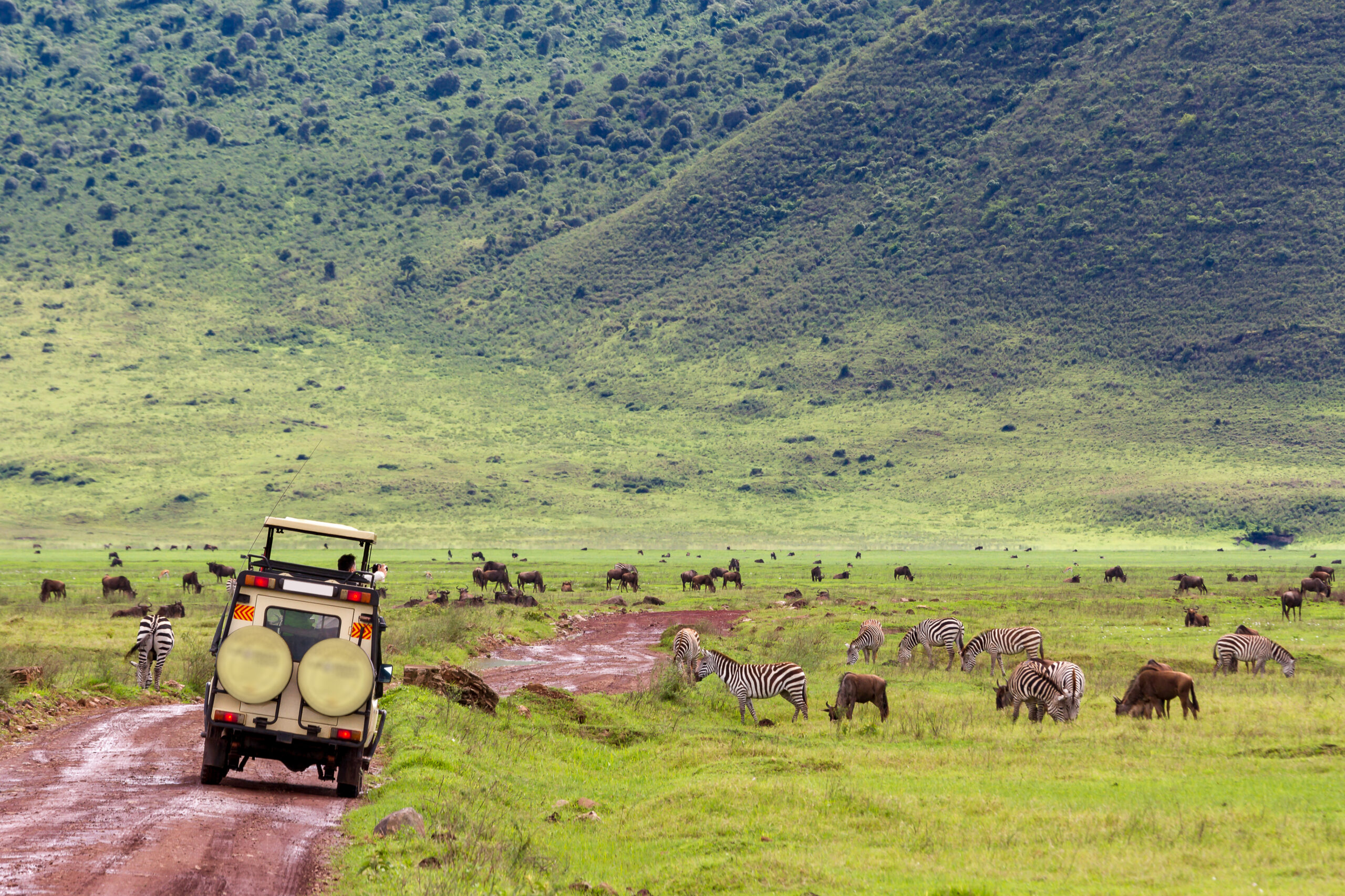
The dry season is the most popular time to visit Ngorongoro and for good reason. The crater’s short grass and clear skies create optimal conditions for wildlife viewing.
Why the Dry Season Works
- Grass is short predators are visible from distance, hunts are easier to observe
- Animals concentrate near the permanent water sources on the crater floor
- Skies are clear morning photography light is exceptional
- The crater floor is dry and roads are easily passable
- All resident wildlife species, including black rhino, are reliably active
The Downside of Peak Season
July through September is also the busiest period. Vehicle numbers on the crater floor peak, and at popular sightings a lion kill, a rhino in the Lerai Forest traffic can be significant. This doesn’t ruin the experience, but it’s a genuine consideration for those who value solitude.
Solution: Descend at 6 AM (when gates open) to get ahead of the midday wave of vehicles. Experienced guides also know the crater’s less-trafficked zones where you can often watch wildlife with few or no other vehicles nearby.
January and February: The Underrated Peak
January and February are among the best months to visit Ngorongoro and are consistently underestimated by first-time safari planners.
The crater is dry, clear, and warm. The short grass plains are golden rather than green, creating beautiful photographic conditions. Predator activity is excellent lions are active, cheetahs hunt frequently, and the hyena clans are highly visible.
Critically, January–February coincides with the Great Migration calving season on the adjacent Ndutu plains of the southern Serengeti. If you’re combining Ngorongoro with a Serengeti visit, this is one of the most spectacular windows in East African wildlife: calving herds on the Serengeti plains, extraordinary predator density, and the Ngorongoro Crater in perfect condition.
What to Expect in January–February
- Clear skies and excellent visibility best photography light of the year
- Dry crater floor roads in optimal condition
- High predator activity as animals concentrate near water
- Black rhino sightings reliable in the Lerai Forest area
- Moderate crowd levels significantly fewer vehicles than July–September
- High accommodation rates (peak season pricing applies)
Green Season (March–May): The Hidden Gem
Tanzania’s long rains fall from March through May, and most international safari travelers avoid this period. They’re wrong to do so at least for Ngorongoro.
The crater in the green season is visually extraordinary. The crater floor transforms from dry tawny grassland to a vivid, layered green landscape. Lake Magadi fills more deeply with water, attracting flamingos in large numbers. Wildflowers bloom across the highlands. The morning mist that rises from the crater floor creates a photographic atmosphere that dry season never delivers.
Why the Green Season Is Worth Considering
- Accommodation rates drop 30–50% from peak pricing
- Significantly fewer vehicles you may have large areas of the crater to yourself
- Lush, green crater floor for outstanding landscape photography
- Excellent birdwatching migratory species are present
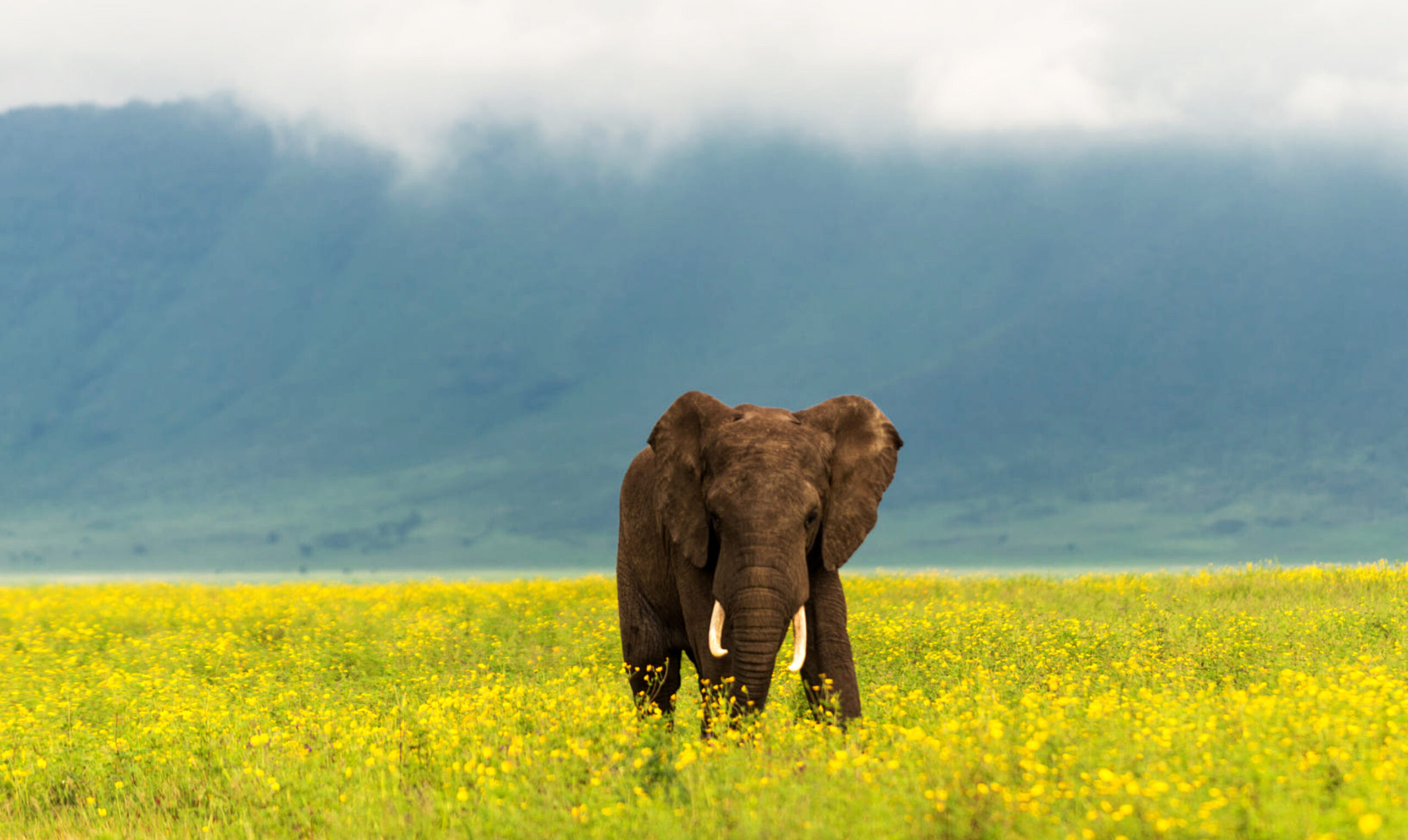
- Wildlife is no less abundant resident animals don’t leave
- More intimate, less commercial feel to the experience
The Honest Challenges of Green Season
- Rain can make some crater floor roads muddy and difficult
- Tall grass reduces visibility for predator spotting
- Morning mist beautiful photographically can limit visibility early
- Occasional full days of heavy rain (April can be wet)
The best green season months for Ngorongoro are March and May at the edges of the long rains when conditions are more stable. Avoid April if weather reliability is important.
November and December: A Comfortable Middle Ground
The short rains of November bring a transitional period shorter, more predictable rainfall than the long rains, with sun often returning by midday. Wildlife is excellent, accommodation rates are lower than peak season, and vehicle numbers are manageable.
December is affected by festive season pricing from mid-month onwards international demand pushes rates up again. But early December (before the 15th) can offer excellent value: dry conditions, good wildlife, and lower midweek rates.
Ngorongoro Crater: Temperature and Weather Guide
| Season | Rim Temperature (°C) | Crater Floor (°C) | Rainfall |
| Jan – Feb (dry) | 15 – 22°C (day), 8 – 12°C (night) | 22 – 30°C | Minimal |
| Mar – May (long rains) | 14 – 20°C (day), 8 – 12°C (night) | 18 – 26°C | Moderate to heavy |
| Jun – Aug (dry, cool) | 10 – 18°C (day), 3 – 8°C (night) | 18 – 24°C | None |
| Sep – Oct (dry, warm) | 14 – 22°C (day), 7 – 11°C (night) | 22 – 28°C | Minimal |
| Nov – Dec (short rains) | 14 – 20°C (day), 8 – 12°C (night) | 20 – 27°C | Light to moderate |
Important note on rim temperatures: The crater rim sits at 2,300 metres above sea level. Nights in June–August can drop to 3–5°C cold enough for frost. Always bring warm layers regardless of season. The crater floor is consistently warmer than the rim.
Best Time for Specific Wildlife in Ngorongoro
| Species | Best Months | Why |
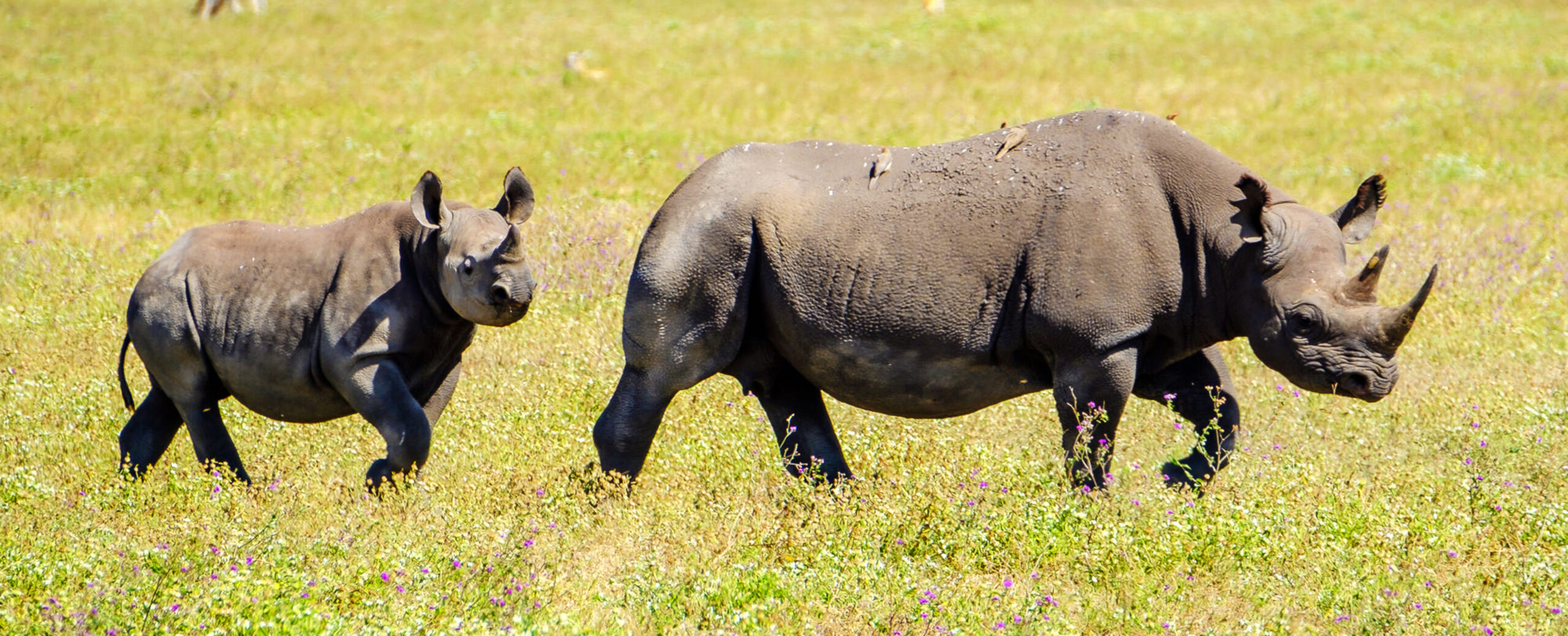
| Black Rhino | Jun – Oct, Jan – Feb | Dry grass, open visibility near Lerai Forest |
| Lion hunting | Jun – Sep | Short grass, prey concentrated near water |
| Cheetah | Jan – Mar, Jul – Oct | Open plains, active hunting in cool mornings |
| Flamingos (Lake Magadi) | Mar – May, Nov – Dec | Higher water levels attract more birds |
| Spotted Hyena | Year-round | Dawn and dusk — hyenas active in all seasons |
| Elephants (big tuskers) | Year-round | Males particularly visible in dry season |
| Buffalo herds | Jun – Oct | Massive herds visible in short-grass plains |
| Birdwatching | Nov – Apr | Migratory species present, wet season activity |
How to Choose the Right Month for Your Trip
Prioritise Wildlife Viewing Quality: June–October
For the most reliable, concentrated, highest-quality wildlife viewing in Ngorongoro Crater, the dry season (June–October) is the right choice. July–September is peak — excellent in every respect, but the busiest.
Prioritise Value: March–May
For the best combination of genuine wildlife quality and significantly lower cost, the green season (particularly March and May) is underrated. You’ll pay 30–50% less, share the crater with far fewer vehicles, and see the landscape at its most dramatic.
Prioritise the Great Migration Combination: January–February
If you’re combining Ngorongoro with a Serengeti safari, January–February is a compelling window the crater is excellent and the Serengeti’s southern plains are alive with wildebeest calving. This is one of the most complete Tanzania safari experiences possible.
Frequently Asked Questions Best Time to Visit Ngorongoro Crater
What is the best month to visit Ngorongoro Crater?
June through October is widely considered the best period dry conditions, excellent visibility, and peak wildlife activity make this the most productive game-viewing window. Within this window, July and August offer the strongest combination of weather and animal activity. January and February are equally excellent for those wanting drier conditions with lower crowd levels than peak season.
Is Ngorongoro Crater good during the rainy season?
Yes particularly in March and May (the edges of the long rains). The crater’s year-round resident wildlife doesn’t leave during the rains, and the lush green scenery, fewer vehicles, and lower costs make it genuinely worthwhile. Avoid April if you want more weather reliability, as this is typically the wettest month.
How cold does it get in Ngorongoro Crater?
The crater floor is generally comfortable, ranging from 18–30°C depending on season. The crater rim, however, sits at 2,300 metres and can be significantly colder dropping to 3–5°C on July and August nights. Always pack warm layers for rim accommodation regardless of the time of year.
Can you see black rhinos in Ngorongoro in any season?
Yes black rhinos are year-round residents of the Ngorongoro Crater floor. They do not migrate out seasonally. Sightings are most reliable in the dry season (June–October) when short grass provides better visibility around their favoured Lerai Forest habitat, but experienced guides find them in all seasons.
When is Ngorongoro Crater least crowded?
The least crowded periods are April (long rains many operators close or reduce operations), followed by May and November. March is quiet but increasingly popular as the green season becomes better known. If avoiding vehicle congestion is a priority, visiting in March, May, or November gives a dramatically quieter crater experience while maintaining good wildlife quality.
Ready to Plan Your Perfect Ngorongoro Visit?
The right timing transforms a Ngorongoro visit from excellent to extraordinary. Our Tanzania safari specialists will match your travel dates to the optimal crater conditions — and combine it with the best Northern Tanzania itinerary for your priorities.
If you’re planning around the best season, this is one of the most powerful itineraries:
👉 7-Day Migration Crossing Mid-Range Safari
✔ Covers Ngorongoro Crater + Serengeti
✔ Perfect for July–October (peak wildlife + river crossings)
✔ Balanced comfort + value
👉 See what real travelers say about us on
Forever Nature Safaris Tripadvisor Reviews