Hadzabe Tribe Tanzania: Who Are the Hadza People?
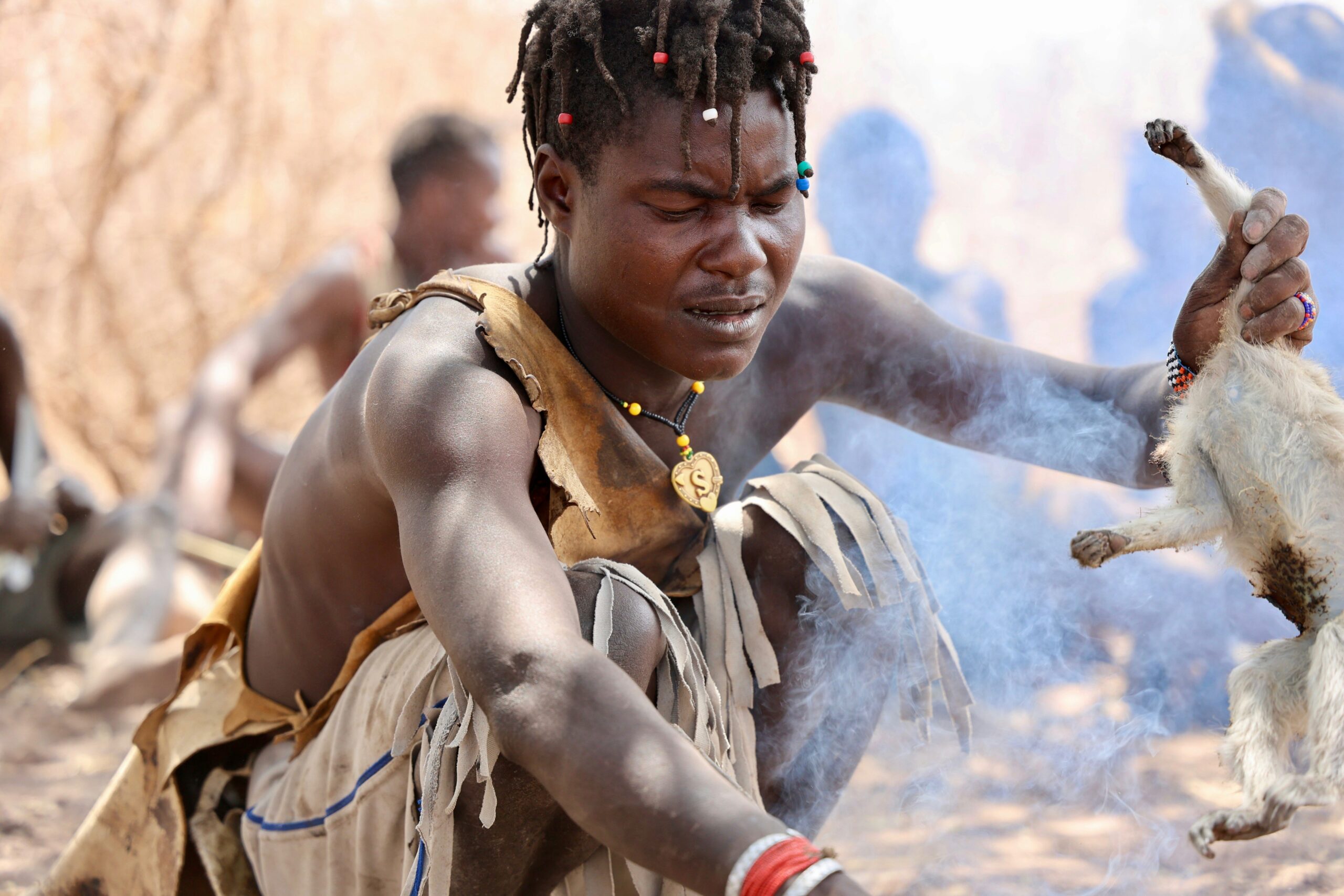
The Hadzabe people of Tanzania are one of the last truly indigenous hunter-gatherer societies on Earth. Living around Lake Eyasi in the shadow of the Great Rift Valley, they have maintained their way of life – tracking game with bows, foraging for berries and honey, sleeping under acacia trees for at least 10,000 years, and possibly far longer.
A visit to the Hadzabe is one of the most profound and ethically complex experiences available on a Tanzania safari. This guide explains who the Hadza are, what a visit actually involves, how to do it responsibly, and how to combine it with the Forever Nature Safaris 8-Day Big 5 + Hadzabe package.
Hadzabe Tribe Tanzania Daily Life
The Hadzabe – also known as the Hadza or Tindiga – are a small indigenous population of approximately 1,200-1,300 people living in north-central Tanzania around Lake Eyasi, a shallow soda lake in the Rift Valley, south of Ngorongoro.
They are one of the last remaining populations in the world who live primarily as hunter-gatherers. Unlike most African communities that shifted to pastoralism or agriculture over the past several thousand years, the Hadza have maintained their ancient lifestyle – hunting animals with handmade bows, foraging for plants and fruit, and harvesting honey from wild beehives – into the present day.
What makes the Hadza uniquely significant to scientists and anthropologists is their language. Hadzane – the Hadza language – contains click consonants that link it to the Khoisan language family of southern Africa, suggesting that the Hadza may represent one of the oldest continuous human lineages on the continent. Genetic evidence supports this: Hadza DNA carries markers of some of the earliest divergences in the modern human family tree.
Hadzabe Daily Life: What They Actually Do
Hadza men hunt with handmade bows and arrows. The arrows are tipped with poison extracted from the adenium (desert rose) plant and are lethal to prey as small as birds and as large as baboons and impala. Hunters go out at dawn and dusk, tracking by footprint, sound, and knowledge of the landscape accumulated over a lifetime.
The Hadza hunt opportunistically. There is no set target animal, no fixed territory – they go where the tracking leads them. A successful hunt provides meat that is shared across the group. An unsuccessful one is unremarkable; the forest will provide tomorrow.
Gathering
Hadza women lead the gathering collecting baobab fruit, tubers, berries, and leaves across a wide daily range. The baobab tree is central to Hadza diet: its seeds are ground into a nutritious porridge, its fruit provides vitamin C, and its hollow trunk stores water during dry periods. Women teach daughters from early childhood which plants are edible, which are medicinal, and which are poisonous.
Honey
Honey is the Hadza’s most prized food. Men locate wild beehives by following a small bird called the Greater Honeyguide a real, documented mutualistic relationship between a bird and a human society. The bird leads hunters to hives; the hunters smoke out the bees and leave a portion of honeycomb for the bird. This partnership has been ongoing for so long that both species have developed learned behaviours around it.
Social Structure
The Hadza live in bands of 20-30 people. These bands have no fixed membership and no hierarchy – individuals move freely between groups, following food sources, family relationships, and personal preference. Leadership is informal and temporary. Decisions are made by consensus. There is no chief, no elder council, no inherited authority.
This social flexibility is considered by anthropologists to be a key survival adaptation – it prevents resource depletion in any single area and maintains peaceful relations between bands through constant intermingling of kin networks.
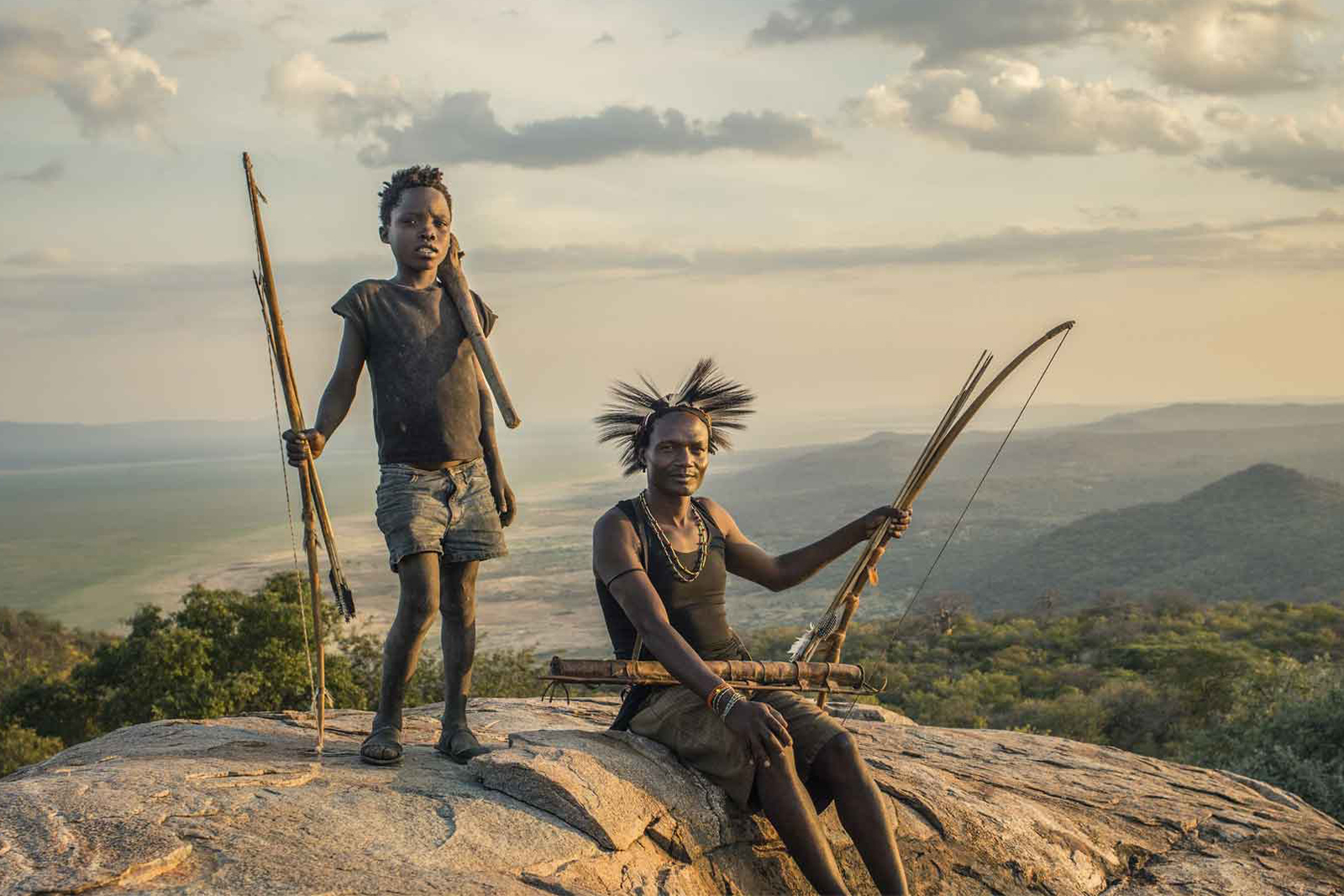
Why the Hadzabe Matter: Conservation & Survival
The Hadzabe face significant and ongoing threats to their way of life. Their traditional lands around Lake Eyasi have been steadily encroached upon by Datoga pastoralists, agricultural settlers, and commercial farming operations. In recent decades, several Hadza communities have been displaced from ancestral territories without consultation or compensation.
Land rights remain the central threat. The Tanzanian government has made progress in recognising Hadza land claims in specific areas notably the Yaeda Valley – but this recognition is fragile and contested by competing land users.
Responsible tourism is one of the most meaningful ways non-Hadza people can support the community’s continued autonomy. When visits are organised through ethical operators, the Hadzabe receive direct economic benefit that strengthens their case for maintaining land access – and reduces pressure to abandon traditional life for agricultural wage labour on encroached land.
How to Visit the Hadzabe Responsibly
Visiting the Hadzabe is not a zoo. It is not a performance. Done responsibly, it is a genuine, human encounter with a community that chooses to host visitors on its own terms. Done badly – through exploitative tour operators, unannounced visits, or commodified cultural shows – it causes real harm to a vulnerable community.
The Ethics of Hadzabe Tourism: What You Need to Know
- Consent: Ethical operators arrange visits in advance with community members who have agreed to host tourists. Turning up unannounced is not permitted and deeply disrespectful.
- Payment: Ensure that your visit fee goes directly to the Hadzabe community – not just to a government or operator intermediary. Ask your operator specifically how community payment works.
- Numbers: Keep group sizes small. Large groups are disruptive to small-band communities. Forever Nature Safaris visits are arranged in private groups with a maximum of 8-10 participants.
- Photography: Always ask before photographing individuals. Not all Hadzabe are comfortable with photography – follow the lead of your guide and the community members themselves.
- Gifts: Do not bring unsolicited gifts – particularly sweets, clothes, or packaged food. If the operator recommends a community contribution, follow that advice specifically.
- Duration: A 2-3 hour morning visit that includes a dawn hunt, honey collection, and camp interaction is the appropriate format. Extended stays risk becoming intrusive.
What a Responsible Hadzabe Visit Looks Like
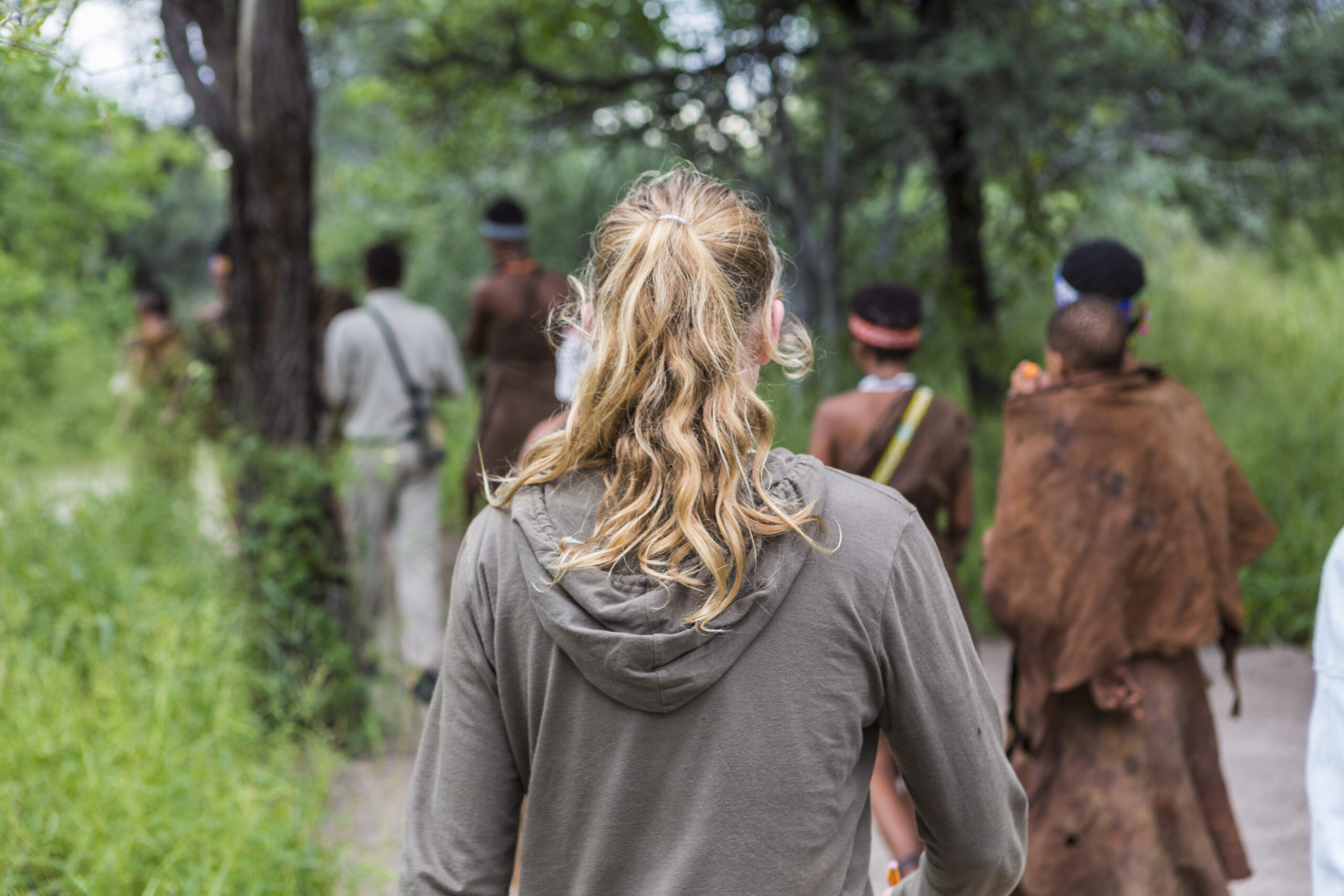
A well-organised Hadza visit begins before dawn – joining the hunters as they prepare their bows and arrows in the camp, then following them through the bush on a morning hunt. The hunters explain their tracking technique, point out animal signs, and demonstrate arrow-making and fire-starting. Children play nearby. Women prepare food.
The interaction is organic, not staged. The Hadzabe are curious about visitors just as visitors are curious about them. Guides who speak Hadzane interpret naturally. You share a fire. You watch the sun rise over the rift. The world, for a moment, is very old.
Visiting the Datoga People: The Second Cultural Experience
The Forever Nature Safaris 8-Day Big 5 + Hadzabe package includes a visit to the Datoga people – the Nilotic pastoralist community who live in the same Lake Eyasi region and have a complex, sometimes tense relationship with the Hadzabe as neighbouring communities.
The Datoga are famous for their metalworking – they are the traditional blacksmiths of the region, fashioning iron arrowheads (used by the Hadzabe), jewellery, and tools from scrap metal using techniques passed down through generations. A Datoga village visit typically includes a metalsmithing demonstration, an explanation of Datoga cattle culture, and the opportunity to purchase handmade jewellery directly from the craftspeople.
The two-community visit – Hadzabe and Datoga – offers a remarkable contrast: hunter-gatherers and pastoralists who have shared the same landscape for centuries, with different relationships to land, livestock, and time.
The 8-Day Big 5 + Hadzabe Safari Package
🔗 forevernaturesafaris.com/8-day-big-5-camping-safari-visiting-the-hadzabe/
The Forever Nature Safaris 8-Day Big 5 Camping Safari & Visiting the Hadzabe combines Tanzania’s flagship wildlife parks with the Lake Eyasi cultural experience in a single, coherent itinerary. It is one of the most complete Tanzania experiences available at any price point.
| Day | Location | Highlight |
| Day 1 | Arrive Arusha | Transfer, briefing, rest |
| Day 2 | Tarangire National Park | Elephant herds – 200+, baobabs, wild dogs |
| Day 3 | Lake Manyara NP | Tree-climbing lions, flamingos, hippo pool |
| Day 4 | Lake Eyasi – Hadzabe | Dawn hunt with Hadzabe hunters, Datoga metalworking visit |
| Day 5 | Serengeti National Park | Entry game drive – Seronera Valley big cats |
| Day 6 | Serengeti National Park | Full day – kopjes, cheetah, lion prides, migration seasonal |
| Day 7 | Ngorongoro Crater | 6 AM descent – black rhino, dense predators, Big Five |
| Day 8 | Ngorongoro → Arusha | Morning rim walk, transfer, depart |
What’s Included
- Private 4×4 safari vehicle with pop-up roof
- Experienced driver-guide with cultural and wildlife expertise
- All Tanzania national park fees
- Lake Eyasi Hadzabe visit (community-arranged, fee included)
- Datoga metalworking visit
- Full-board camping accommodation throughout
- Airport transfers and all logistics
UNIQUE VALUE: The 8-Day Big 5 + Hadzabe is one of very few Tanzania safari packages that combines genuine Big Five wildlife (Serengeti, Ngorongoro, Tarangire) with a responsible, community-consented Hadzabe cultural visit – in a single private itinerary.
Lake Eyasi: Getting There & Practical Information
Lake Eyasi is a shallow alkaline lake in the Rift Valley, approximately 100km south of Ngorongoro Crater. It sits at 1,030 metres elevation and covers approximately 1,000 square kilometres – though its size fluctuates dramatically with rainfall. The lake is a seasonal flamingo habitat and is surrounded by acacia scrubland and fever tree forest that the Hadzabe use for hunting.
The drive from Karatu (near Ngorongoro) to Lake Eyasi takes approximately 1.5-2 hours on dirt roads. The Forever Nature Safaris itinerary routes through this area between Manyara and the Serengeti, making it a natural addition to the northern circuit without significant route deviation.
Experience the Hadzabe Tribe Tanzania the Right Way
A Hadzabe visit is not just an activity it is one of Tanzania’s most meaningful cultural encounters.
Travel with local experts who arrange respectful, community-approved visits around Lake Eyasi while combining the experience with Serengeti, Ngorongoro, Tarangire, and Big Five wildlife.
👉 WhatsApp: +255 778 823 947
👉 Email: info@forevernaturesafaris.com
👉 Request your custom Hadzabe + Big 5 safari itinerary
👉 TripAdvisor: https://www.tripadvisor.com/
👉 LinkedIn: https://www.linkedin.com/in/oshua-munuo/
Frequently Asked Questions
FAQ 1: Who are the Hadzabe people of Tanzania?
The Hadzabe (also called Hadza or Tindiga) are an indigenous hunter-gatherer people of approximately 1,200-1,300 individuals living around Lake Eyasi in north-central Tanzania. They are one of the last communities in the world to live primarily by hunting and foraging, using handmade bows, tracking animals on foot, and harvesting honey from wild beehives. Their language – Hadzane – contains click consonants linking it to some of Africa’s oldest language families.
FAQ 2: Can tourists visit the Hadzabe tribe in Tanzania?
Yes – but only through operators who arrange visits with community consent in advance. Ethical visits are conducted with Hadzabe community members who have agreed to host tourists, with direct payment to the community. Forever Nature Safaris arranges all Hadzabe visits through established community relationships with full consent and fair compensation. Turning up unannounced or using exploitative operators causes harm to a vulnerable community.
FAQ 3: What do you do on a Hadzabe visit?
A responsible Hadzabe visit typically includes: joining hunters at dawn as they prepare bows and arrows, following them through the bush on a morning hunt (observing their tracking technique and bush knowledge), watching traditional fire-making and arrow-crafting demonstrations, and spending time at the camp interacting with the community. The visit usually lasts 2-3 hours and is conducted with a Hadzane-speaking guide.
FAQ 4: Which safari package includes the Hadzabe visit?
The Forever Nature Safaris 8-Day Big 5 Camping Safari & Visiting the Hadzabe is the flagship package combining Hadzabe cultural experience with Tanzania’s Big Five wildlife parks – Tarangire, Lake Manyara, Serengeti, and Ngorongoro Crater. The package also includes a Datoga metalworking community visit at Lake Eyasi. Book at forevernaturesafaris.com/8-day-big-5-camping-safari-visiting-the-hadzabe/
FAQ 5: Is visiting the Hadzabe ethical?
It can be – when organised responsibly. Key criteria: the community must consent in advance, payment must go directly to Hadzabe individuals or community funds, group sizes should be small, photography must be conducted with permission, and visits should be time-limited. Forever Nature Safaris has long-standing community relationships with Hadzabe groups at Lake Eyasi and follows all responsible tourism protocols on every visit.