Fly-In Tanzania Safari Cost (2026): Complete Pricing & Tour Guide
There are two ways to reach the Serengeti from Arusha. One takes 8–10 hours on dusty roads through the Ngorongoro highlands. The other takes 45 minutes, arrives over open savanna at low altitude, and lands you on a grass airstrip where a Land Cruiser is already waiting.
A fly-in safari is not just a luxury upgrade for any Tanzania safari covering more than one park or lasting more than 5 days, it fundamentally changes the quality of your experience. This guide explains the full cost, the routes, the aircraft, and exactly when flying makes sense over driving.
What Is a Fly-In Tanzania Safari?
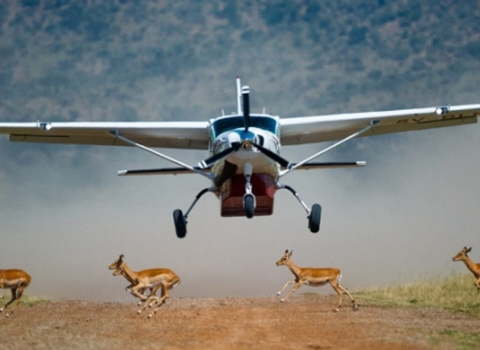
A fly-in safari replaces road transfers between parks and airports with small charter aircraft typically 5–12 seat Cessna Caravans or similar light aircraft operating between bush airstrips within and around Tanzania’s national parks.
Instead of spending half a day in a vehicle navigating potholed roads between Arusha and the Serengeti, you board a small plane in Arusha and land directly at your destination airstrip. Your guide and vehicle meet you on the runway. Game drives begin within minutes.
The difference is not just comfort it is time. Every hour saved on a road transfer is an hour that can be spent on a game drive. On a 7-day safari, switching from road to fly-in routing often adds the equivalent of an entire additional day of wildlife viewing.
Fly-In Tanzania Safari Cost: Full Price Breakdown
Scheduled Charter Flights (Shared Aircraft)
Scheduled charter flights operate on fixed routes between major airstrips, with seats sold individually. These are the most affordable fly-in option and operate on reliable daily or near-daily schedules.
| Route | Flight Time | Cost Per Person (One Way) | Operator Examples |
| Arusha → Seronera (Central Serengeti) | ~50 min | $220 – $350 | Coastal Aviation, Auric Air, Regional Air |
| Arusha → Kogatende (Northern Serengeti) | ~80 min | $280 – $420 | Coastal Aviation, Auric Air |
| Arusha → Ndutu (Southern Serengeti) | ~55 min | $230 – $360 | Coastal Aviation, Regional Air |
| Arusha → Manyara Airstrip | ~30 min | $150 – $250 | Auric Air, Regional Air |
| Seronera → Kogatende (within Serengeti) | ~35 min | $180 – $280 | Coastal Aviation, Auric Air |
| Seronera → Ngorongoro (Manyara) | ~30 min | $160 – $260 | Coastal Aviation |
| Arusha → Ruaha (southern circuit) | ~90 min | $380 – $520 | Coastal Aviation, Auric Air |
| Arusha → Nyerere/Selous | ~90 min | $350 – $500 | Coastal Aviation, Auric Air |
| Zanzibar → Arusha (end of trip) | ~2 hrs | $280 – $420 | Coastal, Auric, Precision Air |
Prices vary by season (peak season surcharges apply July–October and December–February) and by operator. Book directly through your safari operator they handle scheduling, luggage restrictions, and airstrip logistics as part of your itinerary.
Private Charter Flights (Exclusive Aircraft)
Private charters give your group exclusive use of the aircraft no other passengers, flexible departure times, and the ability to land at remote airstrips that scheduled services don’t serve.
| Aircraft Type | Seats | Hourly Rate (USD) | When It Makes Sense |
| Cessna 206 (single engine) | 4 passengers | $600 – $800/hr | Small groups, short hops |
| Cessna Caravan (single engine) | 9–12 passengers | $1,200 – $1,600/hr | Groups of 5–8, most common |
| King Air (twin engine) | 8–12 passengers | $2,500 – $3,500/hr | Long distances, comfort priority |
| Grand Caravan | 13 passengers | $1,500 – $2,000/hr | Larger groups or heavy luggage |
For groups of 4 or more, private charter often costs similar to or less than four individual scheduled seats with added flexibility. Your operator can calculate the per-person cost comparison for your specific group size and route.
Fly-In vs. Drive-In: Honest Comparison
| Factor | Drive-In Safari | Fly-In Safari |
| Arusha to Central Serengeti | 7–9 hours | 50 minutes |
| Arusha to Northern Serengeti | 10–12 hours (not recommended) | 80 minutes |
| Cost (Arusha → Seronera) | $0 additional (included in most packages) | $220–$350 per person one-way |
| Energy on arrival | Tired — limited afternoon game drive | Fresh — game drive within 30 minutes |
| Multi-park flexibility | Limited by road distances | High — multiple parks in one day possible |
| Luggage allowance | No restrictions | Typically 15kg soft bag limit |
| Scenic value | Good (Ngorongoro road is beautiful) | Exceptional — aerial Serengeti views |
| Wildlife viewing en route | Yes (if driving through parks) | No — but time saved goes to game drives |
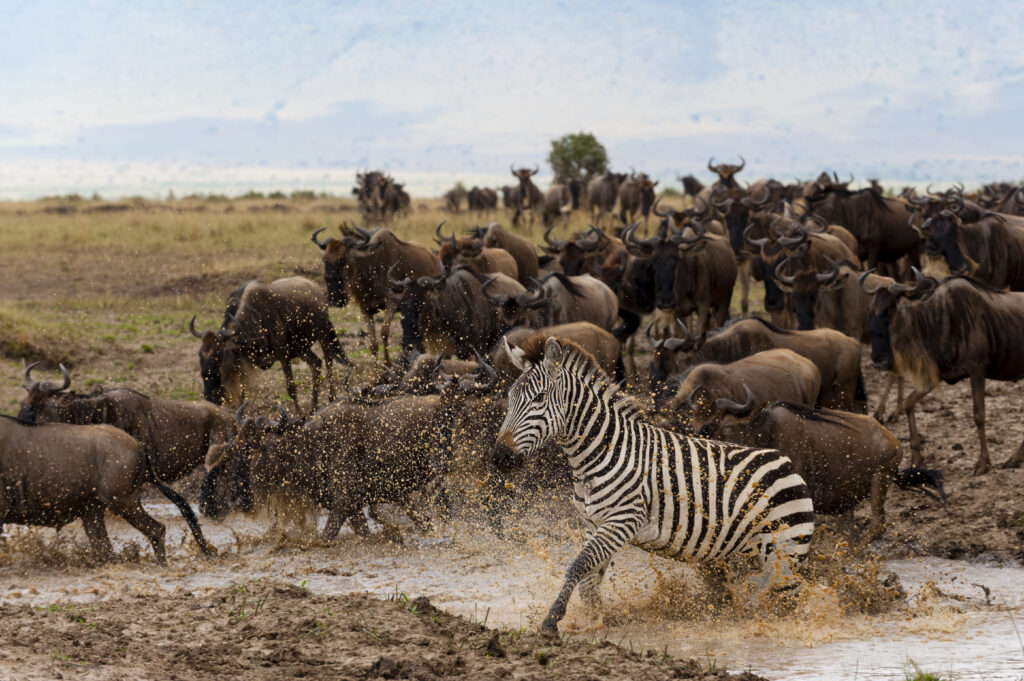
The road from Arusha to the Serengeti via Ngorongoro is genuinely scenic. Many budget and mid-range itineraries use this drive to add a Ngorongoro rim stop or game viewing en route. This is a valid approach for 7+ day itineraries where time allows.
For shorter trips (5–6 days) or any itinerary covering multiple parks, flying is almost always the right call. The time mathematics simply don’t work any other way.
Which Routes Are Worth Flying?
Always Fly: Arusha to Northern Serengeti
The road from Arusha to Kogatende (northern Serengeti) is 10–12 hours. There is no scenario where driving this route makes sense on a modern Tanzania safari. The charter flight takes 80 minutes. This route should always be by air.
Strongly Recommended: Arusha to Central Serengeti
The 7–9 hour road to Seronera is manageable on a long trip with a Ngorongoro stop en route. But if your Serengeti allocation is only 3–4 nights, flying saves you the equivalent of an entire game drive day. Most travelers with 7+ days choose to fly at least one direction (fly in, drive out or vice versa).
Always Fly: Between Serengeti Zones
Moving from Central to Northern Serengeti (or vice versa) by road takes 3–4 hours inside the park on rough tracks. The charter flight takes 35 minutes. This is your game drive time flying between zones is almost always justified on multi-zone itineraries.
Worth Considering: Southern Tanzania (Ruaha, Nyerere)
Southern Tanzania’s premier parks Ruaha and Nyerere National Park are inaccessible by road from Arusha in any reasonable timeframe (10–12+ hours). Fly-in access is the only practical option. Budget $350–$520 per person per sector and plan your southern itinerary entirely around air connectivity.
Full Fly-In Safari Cost Examples
7-Day Fly-In Northern Circuit Safari (Mid-Range)
| Cost Element | Amount (Per Person USD) |
| Return international flights (Europe or USA) | $900 – $1,600 |
| Arusha hotel (1 night each end) | $150 – $300 |
| Charter flight: Arusha → Seronera | $250 – $350 |
| Charter flight: Seronera → Kogatende | $200 – $280 |
| Charter flight: Kogatende → Arusha | $280 – $380 |
| Safari package 6 nights, mid-range camps, full board, game drives | $3,500 – $5,500 |
| Tanzania park fees (6 days x $82) | $492 |
| Tanzania e-visa | $50 |
| Travel & medical evacuation insurance | $150 – $250 |
| Guide and staff tips (6 days) | $180 – $240 |
| TOTAL ESTIMATED | $6,200 – $9,400 per person |
10-Day Fly-In Luxury Safari (Full Circuit)
| Cost Element | Amount (Per Person USD) |
| Return international flights (business class) | $3,000 – $8,000 |
| Arusha luxury hotel (1–2 nights) | $400 – $800 |
| All internal charter flights (4 sectors) | $1,200 – $2,000 |
| Luxury safari package — 8 nights, all-inclusive | $14,000 – $22,000 |
| Tanzania park fees (8 days x $82) | $656 |
| Tanzania e-visa | $50 |
| Travel & evacuation insurance (premium) | $300 – $600 |
| Tips (8 days) | $240 – $350 |
| TOTAL ESTIMATED | $20,000 – $35,000+ per person |
Luggage Rules for Fly-In Safaris
Luggage restrictions are the most commonly overlooked aspect of fly-in safari planning. Small charter aircraft have strict weight limits not just for luggage but for total payload including passengers.
- Standard allowance: 15kg (33lbs) per person in a soft-sided bag no hard-shell cases
- Soft bags only: backpacks, duffel bags, and soft-sided holdalls rigid suitcases cannot be loaded into small aircraft holds
- Carry-on: a small daypack with camera gear, binoculars, and valuables is permitted in the cabin
- Excess luggage: some operators allow pre-storage in Arusha send what you don’t need on safari to a hotel storage facility
- Camera equipment: telephoto lenses and camera bodies are heavy factor this into your weight calculation
Plan your packing around the 15kg limit from the start. Most experienced safari travelers find that 12–14kg is easily sufficient for a 7–10 day trip if clothing is chosen efficiently.
Practical Tips for Fly-In Safaris
Book Early for Peak Season
Scheduled charter services operate with limited seats and fill quickly during peak season (July–October and January–February). Book your flights through your operator at the same time as your accommodation not as an afterthought. Last-minute availability during peak season is rare.
Confirm Airstrip Locations
The Serengeti has multiple airstrips and your camp may use a specific one that isn’t the nearest. Kogatende, Lamai, and Sayari are different airstrips in the northern zone confirm with your operator which airstrip serves your camp.
Weather Delays Are Normal
Small aircraft are weather-sensitive. Flights in Tanzania’s rainy season (March–May, November) may be delayed by afternoon storms. Most operators build buffer time into fly-in itineraries for this reason. Keep connecting flights with wide margins.
The Aerial Experience Is Part of the Safari
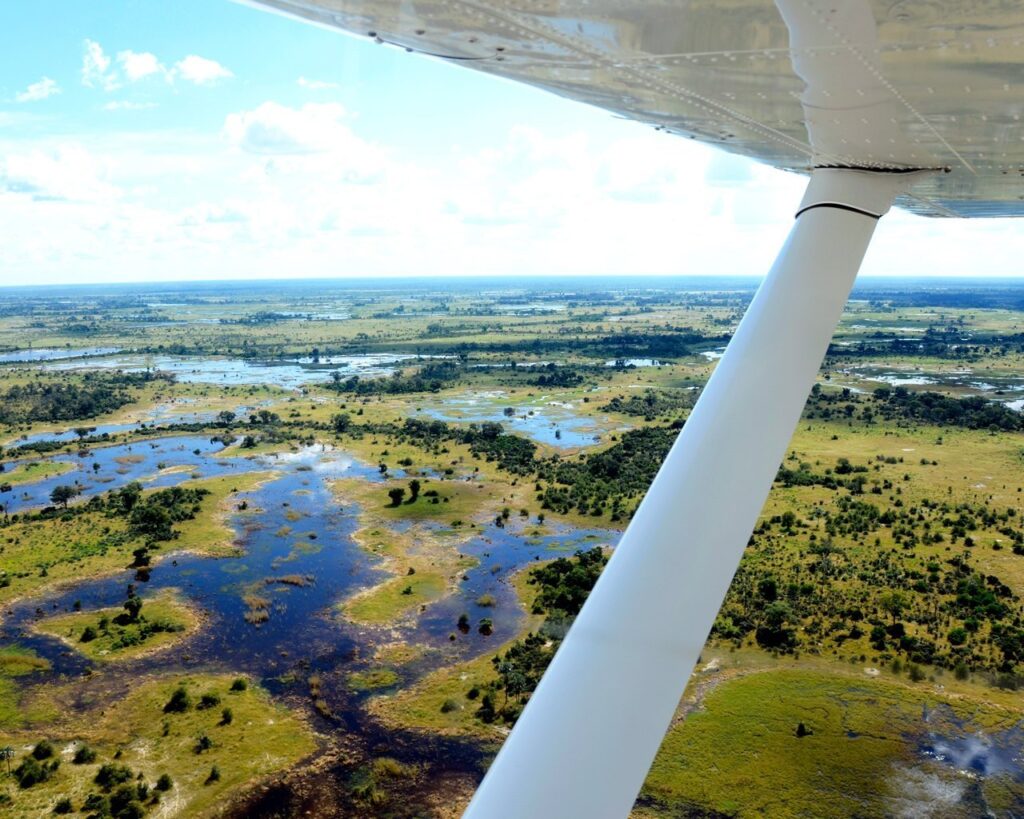
Flying low over the Serengeti at 1,500 feet is genuinely extraordinary. You’ll see the landscape from an angle that no game drive delivers migration columns stretching across the plains, river systems threading through the savanna, wildlife visible from the air. Ask your pilot to point out any herds or large animal groups on approach to your airstrip.
Frequently Asked Questions
Is a fly-in safari worth the extra cost?
For most safari itineraries covering multiple parks or the northern Serengeti: yes, unambiguously. The time saved converts directly into additional game drives. On a 7-day safari, flying instead of driving between 2–3 parks can add 8–12 hours of additional wildlife viewing. The cost per hour of saved road time is competitive with the overall safari cost.
What aircraft are used for Tanzania charter flights?
The most common aircraft is the Cessna 208 Caravan a reliable, well-maintained single-engine turboprop that seats 9–12 passengers. Smaller groups may use a Cessna 206 (4 passengers). All licensed charter operators in Tanzania are regulated by TCAA (Tanzania Civil Aviation Authority).
Can I combine fly-in and drive-in within the same itinerary?
Absolutely this is common and often the best approach. A typical combination: fly in to the Serengeti to maximise game drive time, then drive out via Ngorongoro to add a crater day without an extra flight cost. Your operator will map the most logical routing for your specific itinerary.
How do I get from Zanzibar to the Serengeti?
Flights from Zanzibar (ZNZ) to Arusha (ARK) take approximately 2 hours on scheduled charter services and cost $280–$420 per person. Alternatively, Zanzibar connects to Dar es Salaam (DAR), from which domestic flights reach Arusha or Kilimanjaro. For Tanzania safari-and-beach itineraries, flying Zanzibar to Arusha is the standard routing.
Are there flights directly into the Serengeti from Nairobi?
Yes several operators offer direct charter flights from Wilson Airport (Nairobi) to Serengeti airstrips, bypassing Arusha entirely. This routing suits travelers combining Kenya and Tanzania on one trip. Flight time is approximately 2 hours. Confirm with your operator as KCAA and TCAA cross-border regulations apply
Ready to Plan Your Fly-In Tanzania Safari?
Save time, maximize game drives, and experience Tanzania the smart way.
Our Arusha-based team handles flights, airstrip logistics, camp coordination, and real safari timing so your journey runs smoothly from landing to departure.
👉 Chat with us directly on WhatsApp: +255 778 823 947
👉 Request your personalized fly-in safari itinerary today
👉 See what our travelers say on TripAdvisor: https://www.tripadvisor.com/
👉 Connect with me on LinkedIn: https://www.linkedin.com/in/oshua-munuo/