The Number Everyone Wants Before They Book
You’ve been dreaming about it for years — a vast golden plain, a thundering column of wildebeest, a lion yawning in the afternoon heat. The Serengeti. And then comes the question that snaps you back to reality: how much is this actually going to cost?
The honest answer? It depends — but not in the vague, unhelpful way travel sites usually mean. There are real, specific numbers you can plan around, and that’s exactly what this guide delivers.
Whether you’re weighing a camping safari at $200 a night or a private villa at $2,000, this breakdown covers every layer of Serengeti safari cost so you can plan your trip with confidence, not guesswork. Let’s get into it.
How Much Does a Serengeti Safari Cost? (Quick Answer)
A Serengeti safari typically costs between $300 and $2,500+ per person per day, depending on your accommodation tier, season, and tour operator. Here’s a fast summary:
| Budget Tier | Cost Per Person/Day | What’s Included |
| Budget / Camping | $150 – $350 | Public campsites, shared game drives, basic meals |
| Mid-Range | $350 – $700 | Tented camps, private game drives, full board |
| Upper Mid-Range | $700 – $1,200 | Boutique lodges, better guiding, sundowners |
| Luxury | $1,200 – $2,500+ | Private camps, butler service, exclusive areas |
A typical 7-day Serengeti safari all-in (flights included from Europe or North America) runs between $5,000 and $15,000 per person. That range is wide because the Serengeti accommodates both the backpacker-adjacent budget traveler and the ultra-high-net-worth client who books an entire camp.
What Actually Drives the Serengeti safari cost?
Before breaking down the numbers, it helps to understand the four main cost levers. Pull different ones and the price swings dramatically.
1. Accommodation Tier
This is the single biggest cost driver. The difference between a tented public campsite and a private luxury camp isn’t just thread count — it’s the ratio of staff to guests, the exclusivity of your game-viewing area, and the caliber of the guiding.
2. Season
Peak season (June–October, January–February) commands 20–40% premium rates. This is when the Great Migration river crossings happen and wildlife density is highest. Green season (March–May, November) offers dramatic discounts — sometimes 30–50% off rack rates — with far fewer vehicles on the plains.
3. Group Size & Type
Solo travelers on shared safaris pay per-person rates that make the overall bill more manageable, but private safaris (your own vehicle and guide) cost more per day yet scale better for couples and small groups of 4–6 people.
4. Add-Ons
A hot air balloon safari over the Serengeti runs $600–$700 per person. Flying between parks instead of driving adds another $200–$400 per leg. These extras are worth budgeting for upfront.
Serengeti National Park Fees: The Baseline You Can’t Avoid
Tanzania National Parks (TANAPA) charges non-negotiable conservation fees that every visitor pays, regardless of budget tier. As of 2025–2026:
| Fee Type | Cost (USD) | Notes |
| Adult entry fee | $82 per person/day | Non-resident rate, paid at gate or in advance |
| Child entry fee (5–15 yrs) | $20 per child/day | Under 5 free |
| Vehicle fee | $40–$50 per vehicle/day | Depends on seat capacity |
| Camping levy (public) | $29.70 per person/night | In addition to park entry |
| Camping levy (special private) | $59.40 per person/night | For exclusive private campsites |
On a 6-night Serengeti trip, park fees alone come to roughly $600–$650 per adult for entry. This is baked into most package prices but worth understanding when comparing quotes — if a deal looks suspiciously cheap, check whether fees are included.
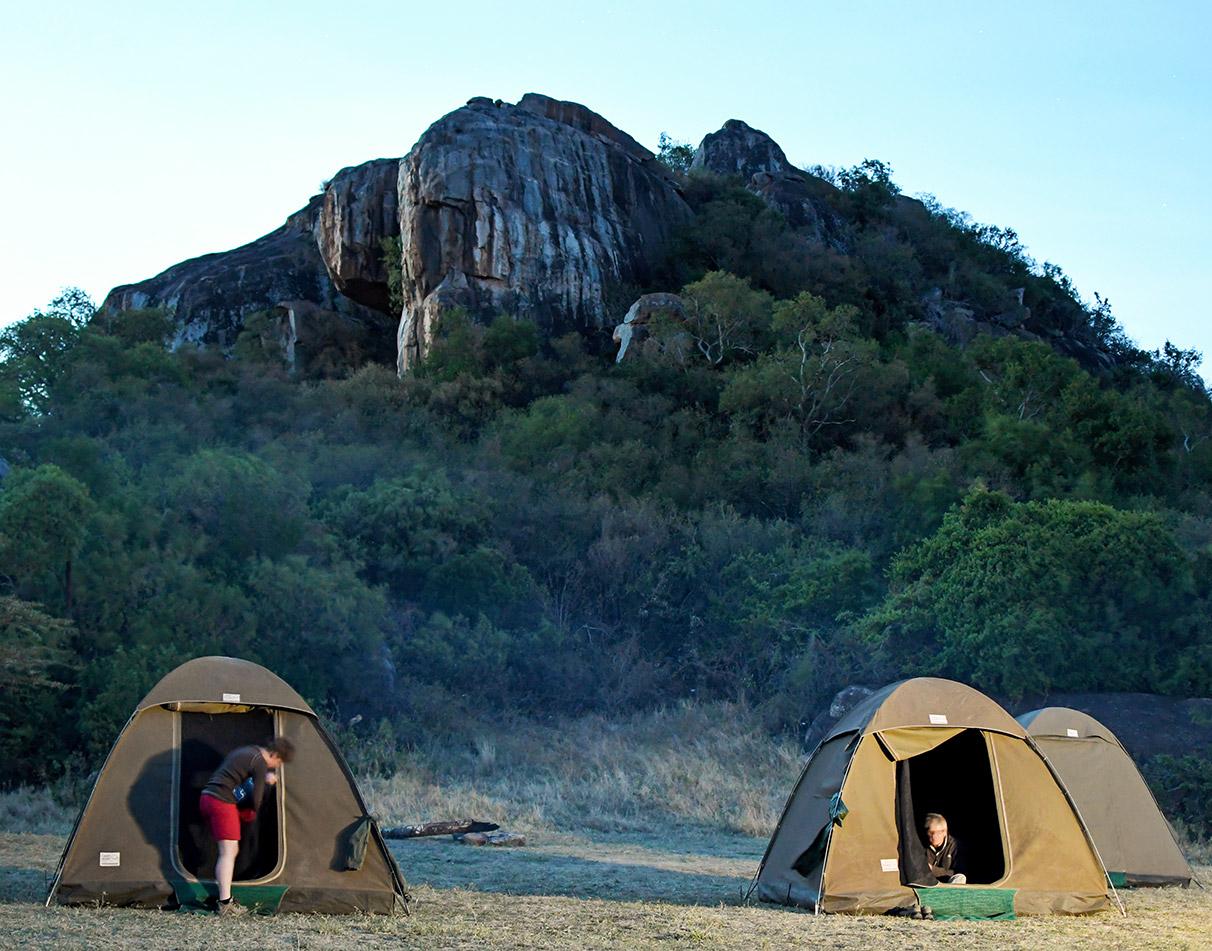
Budget Serengeti Safari: What $150–$350/Day Looks Like
Budget safaris are real and doable, but they require flexibility and lower expectations on comfort. Here’s what this tier delivers:
- Public campsites inside or near the park (tents, shared ablutions, basic facilities)
- Group game drives in shared 4×4 vehicles (often 6–8 people per vehicle)
- Simple but filling meals at the camp or lodge restaurant
- An experienced but not necessarily specialist guide
A 5-day budget Serengeti camping safari booked through a reputable Arusha operator typically runs $1,500–$2,000 per person, including park fees, accommodation, and meals. Flights are extra.
Best Budget Options
- Simba Campsite (public, central Serengeti) — from $29.70/night camping levy
- Seronera Wildlife Lodge — the most affordable permanent lodge inside the park
- Overland group tours from Arusha — best for solo travelers wanting to share costs
Budget tip: Booking directly with smaller Tanzanian operators (rather than international agencies) typically saves 20–30% with the same quality product.
Mid-Range Serengeti Safari: The Sweet Spot at $350–$700/Day
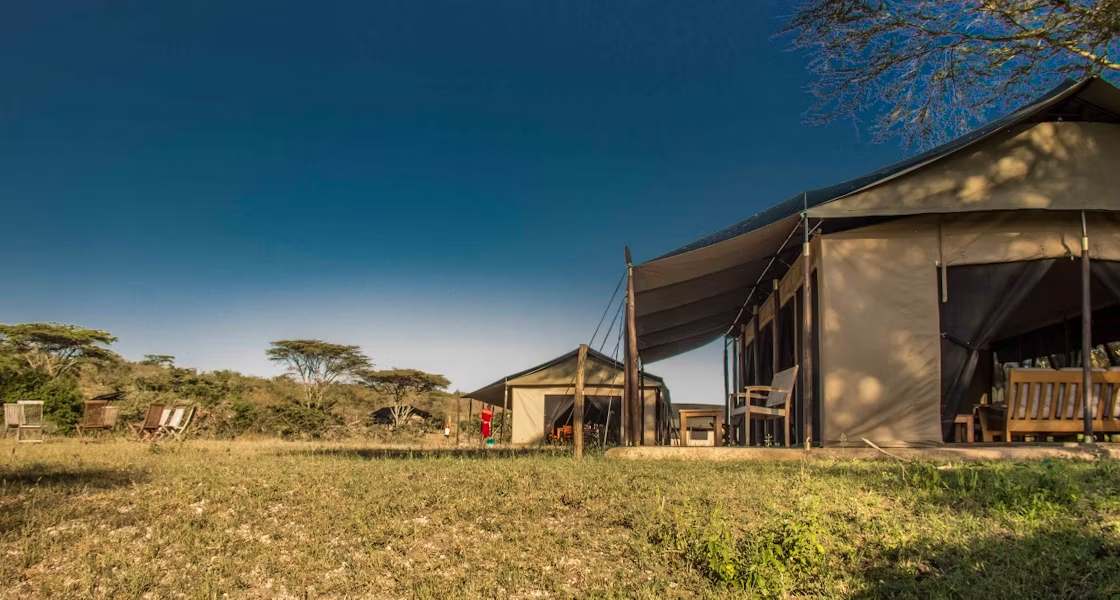
This is where the value-to-experience ratio peaks. Mid-range safaris give you the core Serengeti experience — private game drives, full board, well-located tented camps — without the luxury markup.
What you get at this tier:
- Comfortable tented camps with en-suite bathrooms and hot showers
- Private or semi-private game drives (typically 4 people max per vehicle)
- Full board including breakfast, lunch, dinner and afternoon tea
- Guides who know the terrain well and speak good English
- Camp locations designed around wildlife movement (not just convenience)
A 7-day mid-range Serengeti safari typically costs $3,500–$5,500 per person all-inclusive from Arusha (excluding international flights). For couples, costs per person often drop when sharing accommodation.
Mid-Range Camps Worth Knowing
- Kati Kati Tented Camp — seasonal camp that follows the migration
- Serengeti Serena Safari Lodge — solid permanent lodge in the central Serengeti
- Ikoma Bush Camp — great value near the Western Corridor
- Robanda Safari Camp — excellent position for Grumeti River action
Luxury Serengeti Safari: What $1,200–$2,500+/Day Buys You
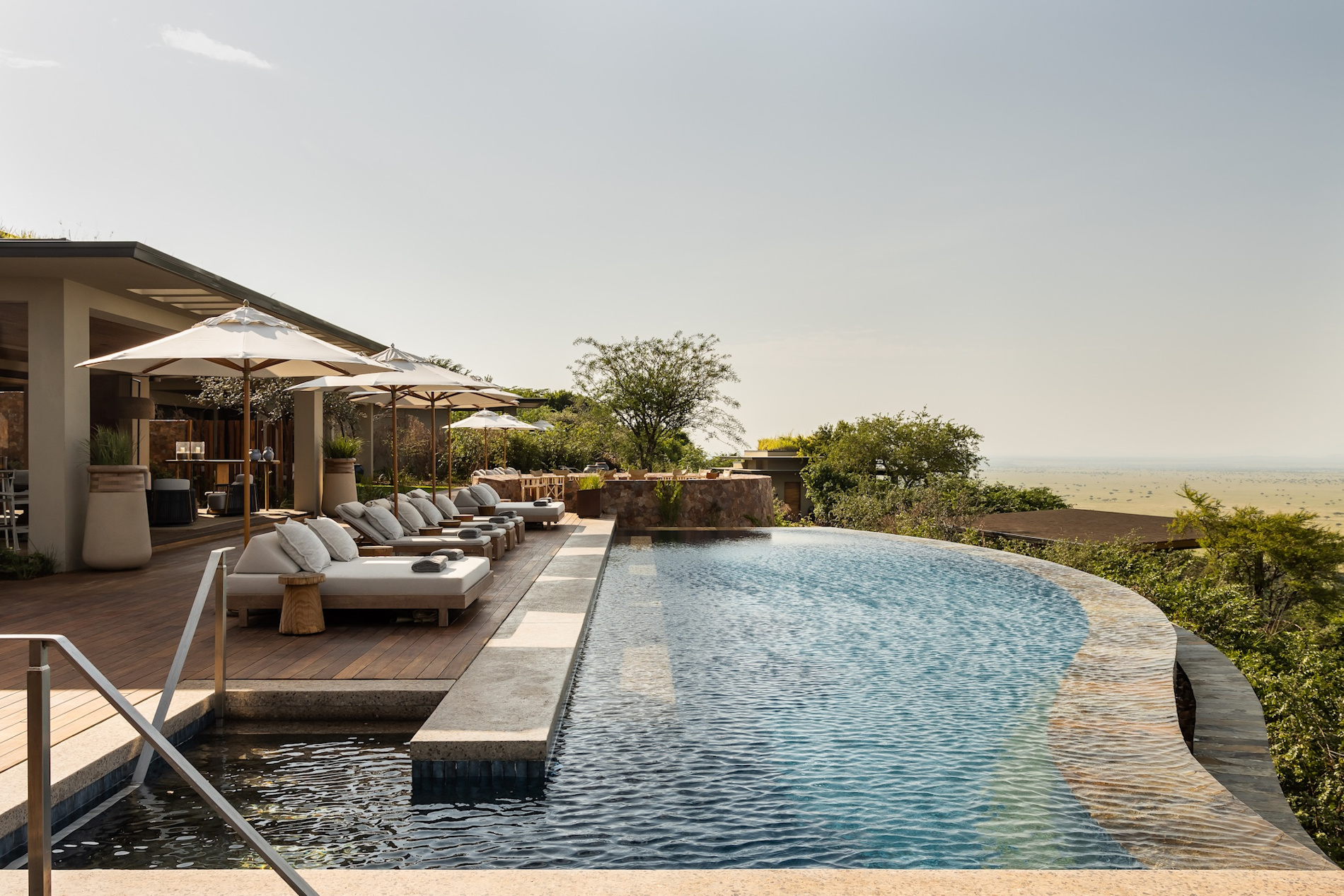
The Serengeti luxury market is genuinely world-class, and the premium is not just for bragging rights. At this tier, the safari transforms from an activity into a complete sensory immersion.
Here’s what separates luxury from mid-range:
- Private conservancy access — exclusive areas with no other vehicles
- Expert specialist guides (often with formal wildlife ecology training)
- Vehicles configured specifically for photography, with power sockets and beanbag rests
- Night game drives — illegal in TANAPA parks but available in private conservancies
- Walking safaris with armed ranger escorts
- Private plunge pools, butler service, and sommelier-curated sundowners
- Fly-in access between camps, eliminating long road transfers
Top-tier Serengeti luxury camps command $1,500–$2,500 per person per night all-inclusive. A 7-night luxury safari typically runs $12,000–$18,000 per person. Yes, that’s real money — but for what’s on offer, the cost-per-memory ratio is arguably unbeatable.
Iconic Luxury Camps in the Serengeti Ecosystem
- Singita Sabora Tented Camp — 350,000-acre private Grumeti reserve
- &Beyond Serengeti Under Canvas — follows the migration seasonally
- Four Seasons Safari Lodge Serengeti — the benchmark for permanent luxury
- Asilia Namiri Plains — near-exclusive access to Serengeti’s best cheetah territory
- Mahali Mzuri (Richard Branson’s camp) — 6 vehicles, 12 tents, jaw-dropping views
Sample 7-Day Serengeti Safari Itinerary with Costs
Here’s a realistic mid-range itinerary to give you a practical cost anchor:
| Day | Location / Activity | Approx. Cost/Person |
| Day 1 | Fly Kilimanjaro International → Arusha. Transfer to lodge. | $200 (domestic transfer + hotel) |
| Day 2 | Drive to Tarangire NP. Full day game drive. Overnight tented camp. | $380 (park fees + camp) |
| Day 3 | Drive Tarangire → Serengeti via Ngorongoro Crater rim. | $420 (park fees + scenic route) |
| Day 4 | Full day in Central Serengeti. Dawn and dusk drives. | $450 (park fees + camp) |
| Day 5 | Northern Serengeti (migration dependent). Afternoon at Mara River. | $490 (park fees + transfer) |
| Day 6 | Optional balloon safari at dawn. Afternoon leisure. | $700 (balloon $620 + camp) |
| Day 7 | Morning game drive. Drive to Arusha. Fly home. | $200 (park exit + transfer) |
Total estimated cost (mid-range, excluding international flights): $4,800–$5,500 per person, including all park fees, accommodation, meals, and transfers.
Is a Serengeti Balloon Safari Worth the $600+ Price Tag?
Short answer: yes — but only if you time it right and set realistic expectations.
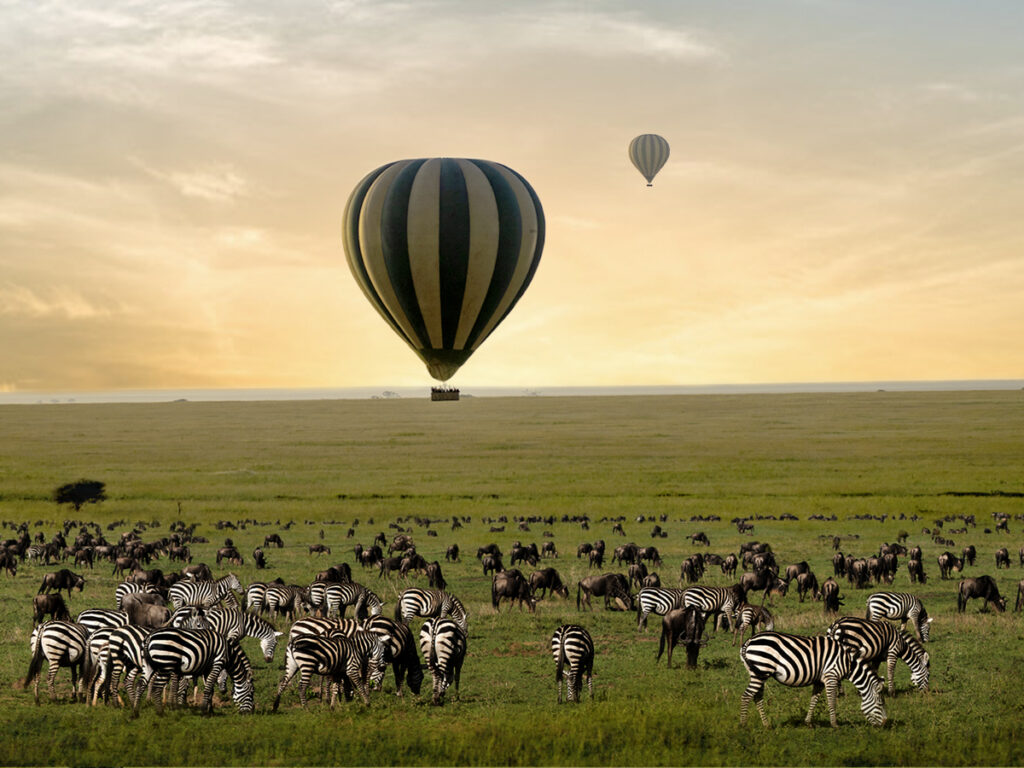
A hot air balloon safari over the Serengeti costs $599–$699 per person (most operators are in this range) and includes a champagne breakfast in the bush after landing. The experience lasts about an hour in the air.
The catch: early morning can mean low light for photography, and the Serengeti’s plains look more dramatic from the ground during a lion hunt. That said, for wildlife context — understanding scale, migration columns, terrain — nothing compares to seeing the Serengeti from 1,000 feet up at sunrise.
Best months for balloon safaris: July–October when the northern plains are populated with migration herds. January–February for calving season in the south.
Best Time to Visit Serengeti (And How Timing Affects Cost)
| Month | Season | What You’ll See | Relative Cost |
| Jan – Feb | Dry / Calving | Wildebeest calving, predators, clear skies | High (Peak) |
| Mar – May | Long Rains (Green) | Lush scenery, bird life, fewer tourists | Low (30–50% off) |
| Jun – Jul | Dry (Peak begins) | River crossings starting, high predator activity | High |
| Aug – Oct | Dry (Peak) | Main migration river crossings (Mara River) | Highest |
| Nov | Short Rains | Migration moving south, good value | Medium-Low |
| Dec | Dry / Shoulder | Good wildlife, festive season pricing applies | Medium-High |
Insider tip: The ‘green season’ (March–May) is genuinely underrated. Predator activity remains high — lions and cheetahs are highly active before the rains arrive. The Serengeti turns emerald green. And your chances of having a game drive with no other vehicles in sight are real.
What’s Typically Included (and Not Included) in Safari Packages
Usually Included
- All meals at camp (full board)
- Twice-daily game drives in a 4×4 safari vehicle
- National park entry fees
- Professional guide and driver
- Accommodation with en-suite facilities
- Airport / airstrip transfers within the itinerary
- All drinking water at camp
Usually NOT Included
- International flights
- Visas (Tanzania e-visa: $50)
- Travel insurance (budget $100–$200)
- Tips for guides and camp staff ($20–$30/day is standard)
- Premium beverages and minibar
- Balloon safaris and special activities
- Laundry beyond basic service
- Medical vaccinations and medications
Practical Travel Tips: Visas, Flights, and Logistics
Getting There
Most international visitors fly into Kilimanjaro International Airport (JRO) or Julius Nyerere International Airport (DAR) in Dar es Salaam. From Kilimanjaro, Arusha is a 45-minute drive — the main gateway for northern circuit safaris.
From Arusha to the Serengeti by road is approximately 8–10 hours. Most mid-range and luxury packages use charter flights from Arusha’s smaller airports (Arusha Airport or Kilimanjaro International) to Serengeti airstrips — a 45–90 minute flight saving significant transfer time. Budget: $250–$400 per sector for scheduled charter flights.
Visa Requirements
Most nationalities need a Tanzania tourist visa. The e-visa costs $50 and should be applied for online before departure at immigration.go.tz. US citizens can also get a visa on arrival, though the e-visa is smoother.
Health Requirements
- Yellow fever vaccination required if arriving from endemic countries
- Malaria prophylaxis strongly recommended (consult your doctor)
- Travel and medical evacuation insurance is not optional — get it
- Nearest major medical facility from the Serengeti is in Arusha (ELCT Arusha Lutheran Medical Centre)
What to Pack for a Serengeti Safari
Packing wrong for a safari costs you comfort and opportunity. The Serengeti mornings can be surprisingly cold (10°C/50°F in July), while afternoons hit 30°C/86°F. Layers are not optional — they’re essential.
- Neutral colors: khaki, olive, tan, brown (dark blue and black attract tsetse flies)
- Lightweight merino or synthetic base layers for cold mornings
- A warm fleece or softshell jacket
- Wide-brimmed hat and high-factor sunscreen
- Binoculars: 8×42 is the gold standard for safari
- Camera with a telephoto lens (300mm+ recommended)
- Dust-proof bag or dry bag for camera gear
- Prescription medications and a personal first aid kit
- Power bank — many camps have limited charging
Mistakes to Avoid When Planning Your Serengeti Safari
Booking Too Late for Peak Season
Top camps in the Serengeti book out 9–12 months in advance for July–October. If you want Singita or &Beyond during the river crossing season, plan accordingly. Mid-range camps fill up 4–6 months out.
Ignoring the Internal Flight Option
That 8-hour road transfer from Arusha to Serengeti is brutal on a long trip. The charter flight costs $300–$400 more but adds a full game drive to your itinerary. Do the math.
Choosing a Tour Operator Solely on Price
A $100/day difference between two operators often means a vehicle with a cracked windscreen, a guide with minimal training, or accommodation nowhere near the migration. The cheapest option is rarely the best value.
Not Factoring in Tips
Tipping is not optional in Tanzania’s safari culture — it’s a significant part of guide and camp staff income. Budget $15–$20 per day for your guide and $10–$15 per day for camp staff collectively. On a 7-day safari, that’s $175–$245 extra.
Underestimating the Balloon Safari Budget
Many travelers decide to do the balloon safari spontaneously on arrival. The problem: it must be booked and paid for in advance. Include it in your initial budget planning.
Expert Insider Tips to Get More for Your Budget
Go Green Season — Seriously
The best-kept secret in East African safari travel is the green season. Your savings are real (up to 40% off peak rates), the photography is extraordinary (dramatic skies, lush grass, baby animals), and you’ll have the Serengeti feeling almost to yourself.
Combine Parks Strategically
The classic Northern Tanzania circuit — Tarangire, Ngorongoro, and Serengeti — covers roughly 1,500km and can be done in 7–10 days. Bundling parks with a single operator reduces per-park transfer costs significantly.
Ask About Fly-Camping
Several operators offer ‘fly-camping’ — moving a small camp to follow wildlife in exclusive areas, often at lower cost than permanent luxury lodges. Unforgettable and genuinely intimate.
Book Directly with Tanzanian Operators
UK, US and European travel agents add 20–35% margin on Tanzania safaris. Booking directly with a licensed Tanzanian tour operator (look for TATO membership — Tanzania Association of Tour Operators) gives you the same or better product at lower cost.
Time Your Migration Viewing
The Great Migration doesn’t follow a fixed schedule. The river crossings at the Mara River (northern Serengeti) typically happen July–October, but the exact timing shifts by several weeks each year. A good operator tracks migration sightings in real-time — ask them how they do this before you book.
Full Cost Summary: Budget, Mid-Range, and Luxury Safari
| Cost Item | Budget | Mid-Range | Luxury |
| Safari package (7 nights, all-in from Arusha) | $1,800 – $2,800 | $4,000 – $6,500 | $12,000 – $18,000 |
| International flights (return, per person) | $800 – $1,400 | $1,000 – $1,800 | $2,000 – $6,000+ |
| Internal charter flights (Arusha → Serengeti) | Not included | $600 – $800 | Included |
| Tanzania e-visa | $50 | $50 | $50 |
| Travel & medical insurance | $100 – $150 | $150 – $250 | $250 – $500 |
| Tips (7 days) | $175 – $245 | $175 – $245 | $245 – $350 |
| Balloon safari (optional) | $620 – $700 | $620 – $700 | Often included |
| ESTIMATED TOTAL PER PERSON | $3,500 – $5,500 | $6,600 – $10,500 | $15,000 – $25,000+ |
The Bottom Line: Is the Serengeti Worth It?
The Serengeti is not cheap. But framing it purely as a cost is missing the point. This is one of the last truly wild landscapes on Earth — two million animals moving across 30,000 square kilometers in a cycle that has continued for millennia.
The river crossings at the Mara. A leopard draping itself over an acacia at golden hour. The silence of the plains at dawn. These are not tourism products — they’re encounters with something ancient.
Budget well, choose your operator with care, time your trip strategically, and the Serengeti will return every cent you spend on it.
Ready to Plan Your Serengeti Safari?
Get a personalised safari itinerary and cost quote tailored to your travel dates, group size, and budget. Our Tanzania-based safari specialists have first-hand knowledge of every camp, guide, and migration pattern mentioned in this guide.
→ Request Your Free Serengeti Safari Quote Today
FAQs Serengeti safari cost
1. How much does a 7-day Serengeti safari cost?
A 7-day Serengeti safari costs between $3,500 and $18,000+ per person depending on accommodation tier, season, and whether flights are included. Mid-range packages from Arusha typically run $4,500–$6,500 per person all-inclusive (park fees and meals included, international flights excluded).
2. What is included in a Serengeti safari package?
Most Serengeti safari packages include accommodation, full board (all meals), twice-daily game drives, a professional guide, national park entry fees, and camp-to-airstrip transfers. International flights, visas, tips, balloon safaris, and travel insurance are almost always additional.
3. When is the cheapest time to visit the Serengeti?
The cheapest time to visit the Serengeti is during the long rains (March–May), when accommodation prices drop 30–50% from peak rates. Despite the rain, wildlife activity remains excellent — predators are highly active, and the scenery is at its most dramatic.
4. Are Tanzania national park fees included in safari prices?
In most cases, yes — reputable operators include TANAPA park fees in their quoted price. Always confirm this when comparing quotes. Park entry fees for adults run $82 per person per day, which adds up significantly on a multi-day trip.
5. Is a Serengeti balloon safari worth the cost?
A Serengeti hot air balloon safari costs $599–$699 per person and is widely considered worth it for the unique aerial perspective of the plains and wildlife. It works best from July to October when migration herds are in the north. Book and pay in advance — it sells out fast during peak season.